
REVIEW · ESCAPE GAMES & CITY SCAVENGER HUNTS
Emperor Norton’s Fantastic San Francisco Time Machine
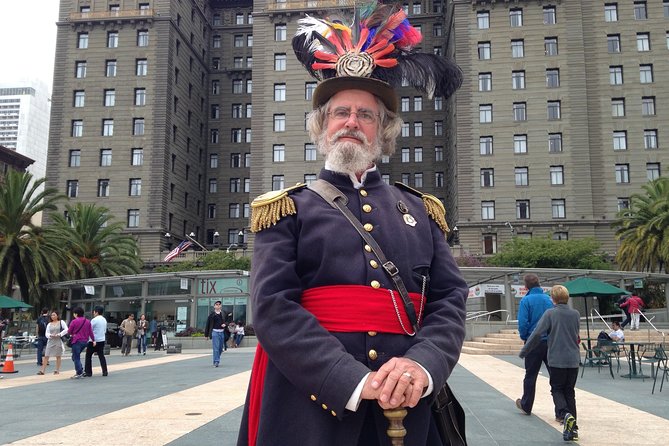
A man in costume runs SF history. Emperor Nortons Fantastic San Francisco Time Machine is a fun, fact-filled walking tour that strings together Barbary Coast lore and 1906-era stories, all with your guide in period character.
I especially like how the route hits major landmarks like Union Square, Maiden Lane, Lotta’s Fountain, and Portsmouth Square without turning into a lecture marathon. The second big win is the energy, you follow a character who clearly loves the city, so even the darker corners of the past feel human, not stuffy. The main thing to consider is that this is still a walk, around two miles over about two hours, and masks and social distancing are required.
Key Highlights You Should Know
- A small group max of 10 keeps the pace friendly and the stories personal
- Walk around two miles at a leisurely pace, starting in the heart of downtown
- Barbary Coast to 1906 covers the eras you keep hearing about, with landmarks tied to them
- Emperor Norton as the guide gives the history a theatrical, memorable framework
- Lotta’s Fountain focus includes the 1875 landmark plus earthquake commemoration stories
Solve the next clue somewhere in the city grid



Price and Logistics: What You Get for $20 in 2 Hours
At $20 for about 2 hours, this is one of the easier ways to get oriented in San Francisco while also learning real local backstory. You are paying for a professional guide, and your ticket covers taxes and handling charges, so there are no surprise add-ons just to hear the story.
You meet at Union Square at 11:00 am, then the tour ends at Old Saint Mary’s Cathedral on 660 California St. The tour uses a mobile ticket, and it is close to public transportation, so you do not need to plan a car or complicated transfers.
You will walk at a leisurely pace for roughly two miles. That is not huge, but it is enough that comfortable shoes matter. Also, this is a small group experience with a maximum of 10 travelers, which is part of why the guide can keep things flowing instead of rushing 30 people through history.
Food and drinks are not included, and you are on your own for lunch or a snack afterward. Hotel pickup and drop-off are not included either, so you will want to show up ready to walk.
Meet Emperor Norton, Then Let the City Do the Rest
This tour works because the guide is not just narrating facts. Emperor Norton is the vehicle, a larger-than-life San Francisco figure brought to life as you move through the neighborhoods and landmarks.
The payoff for you is simple: you stop seeing the city as a checklist. You start noticing how places connect, how one block can hint at what the shoreline used to look like, or how a public square can hold layers of meaning over time. The guide’s costume and persona also make the experience feel like a street performance, but the content stays grounded in real locations and specific events.
If you like history in story form, this is exactly that kind of tour. One of the most praised parts of the experience is how much information you get without it turning into a dry march. You get little turns of attention, like why people gathered somewhere, what a monument meant, or who showed up in the city’s public life.
Barbary Coast Trail: Where the Story Turns Gritty
The tour begins with the Barbary Coast Trail, a section that winds through multiple historical points. This is where you get the vibe of old San Francisco, when the city’s edges felt wilder and less controlled. You are not just hearing the name Barbary Coast, you are walking through the kinds of places where that reputation came from.
The major value here is perspective. As you move along the route, you begin to understand how downtown geography can feel different depending on what era you are picturing. Even if you have been to San Francisco many times, this kind of street-level walk can make the past feel more concrete than museum panels.
There is also a practical lesson baked into it. When you later roam the city on your own, you are more likely to recognize landmark clusters and understand why they matter, instead of just admiring the scenery. You also get the sense that the story does not start at a single museum doorway. It starts right where you are standing.
Union Square and the Dewey Monument: Downtown, Explained
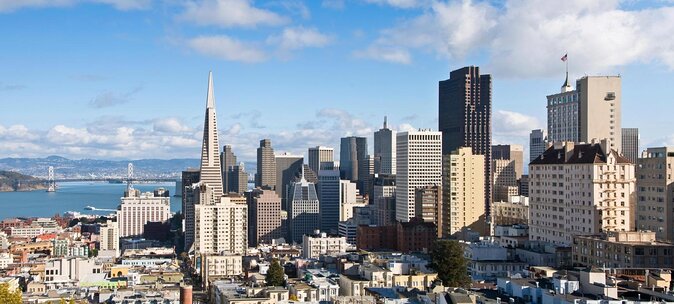
Next, you head to Union Square, with a shorter stop that focuses on the square’s history and the Dewey Monument. Even if you think you already know Union Square, the tour helps you read it differently.
Union Square can feel like a modern shopping and meeting hub. But the story ties it to why this spot became a center of public life. The Dewey Monument discussion gives you a clearer picture of how civic pride and public art show up in the city’s layout.
This stop is only about 20 minutes, which is useful. You get the essentials without being stranded in one place while the afternoon schedule continues. It is a great example of how this tour balances must-know landmarks with pacing.

Jackson Square: The Barbary Coast Backstory in Motion
At Jackson Square, you get a 30-minute look at the notorious Barbary Coast connection. This is not just a morality tale. The guide connects the area to the larger reputation of San Francisco’s early nightlife and its mix of characters, commerce, and chaos.
Walking in this portion of the route matters, because it helps you understand that the city’s reputation was shaped by location, not just legends. You are moving through the physical environment that shaped daily life back then.
One caution for your enjoyment: because this section leans into the past’s rougher themes, you will probably enjoy it more if you are open to hearing about seedy history without sanitizing it. If you are hoping for pure sunshine nostalgia, you might find parts of the storytelling a bit darker than expected.
Maiden Lane: From Glamour to Brothels
Then comes Maiden Lane, roughly 15 minutes on the clock. The history here centers on how the street was lined with brothels, and the contrast can be striking if you only know it as a modern downtown street.
This stop is a good reminder that San Francisco’s “pretty” streets can have complicated pasts. The charm is that the guide keeps it understandable, so you are not left with a name and a vague vibe. You get enough detail to connect the street’s reputation to the city’s broader development.
If you enjoy hearing how cities evolve, you will like this part. It is quick, but it is memorable, and it adds texture to everything else on the route.
Lotta’s Fountain: A Gathering Place and a 1906 Memory
At Lotta’s Fountain, you get about 20 minutes. This stop is packed because it is both a landmark and a story anchor.
The tour highlights the fountain as a gathering place since 1875, then links it to the yearly earthquake commemoration and the ways the 1906 event changed the city. This is where the tour does a particularly good job making the earthquake feel local, not abstract.
The guide also brings in names tied to the city’s entertainment and public life, including Lotta Crabtree, Lola Montez, and Luisa Tetrazzini. You are not just learning about one event. You are learning how San Francisco’s performers and personalities fit into the city’s public identity.
And here is why this stop is often the highlight for people who like real details. You are hearing about buildings that survived, which helps your brain picture what changed. It gives you a stronger sense of why some neighborhoods and structures became symbols, and why commemoration matters.
Portsmouth Square: The City’s Birthplace and Chinatown’s Living Room
Next is Portsmouth Square, about 15 minutes. The tour presents it as the birthplace of San Francisco and also describes it as Chinatown’s living room.
Even without going deep into Chinatown itself during the tour, this stop gives you a key orientation point. You see how public spaces function like neighborhood centers, especially in older cities where social life happened outdoors and within walking distance.
If you like the “how did people live” angle of history, you will appreciate this. Squares like this are not just for photos. They are for daily rhythms, announcements, meetings, and the casual human stuff that makes a city feel alive.
Old Saint Mary’s Cathedral: Closing the Loop
The tour ends at Old Saint Mary’s Cathedral, with about 5 minutes allocated. The storytelling here includes the cathedral’s history and the passing of Emperor Norton.
This ending matters because it snaps the whole experience together. You start with a character and you end at a real place tied to the city’s story. Even if you are not religious, cathedral architecture and historic civic sites tend to ground a narrative, and this one does.
It also gives you a practical ending point. You do not finish in the middle of nowhere. You end on California Street, so it is easier to get back to your hotel, meet friends, or head to lunch.
What About the Guide Experience, Really?
This tour is repeatedly praised for one reason: the guide brings the city to life without losing the facts. The Emperor Norton character is not just decoration. You get a strong mix of landmark explanations, behind-the-scenes trivia, and connections between eras.
A standout detail from the experience: the guide offers lunch recommendations. In one example, the tour includes suggestions that lead people to try popovers at Neiman Marcus. That kind of inside tip is not essential to the history, but it absolutely adds value because it turns the tour into a start to your day, not just an isolated activity.
Another praised element is that the guide seems to have an edge of street-level local knowledge, including lesser-known building secrets and infamous individuals you might miss if you only rely on basic guidebooks. The result is that you leave with names and locations you can look up later, which helps the city keep unfolding after the walk.
A Simple Plan for Your Afternoon After the Walk
This tour does not feed you, but it sets you up well. Since you end at Old Saint Mary’s Cathedral, you are well positioned for a downtown meal and an easy second round of sightseeing.
Here is how I would use this timing:
- Plan lunch within walking distance or one short transit ride from the end point.
- If you are going to browse shops or museums afterward, use the landmarks from the tour as your anchor points, so your walking feels intentional.
- Keep the “history lens” on for the rest of the day. When you see a monument, a square, or a street name, you will suddenly know what question to ask.
If the guide suggests a specific place to eat, take it seriously. The best part of a walking tour is that it gives you real local shortcuts. When your guide is dressed as Emperor Norton and still finds time to point you toward a good bite, that is a sign you are with someone who genuinely cares about San Francisco.
Who Should Book This Time Machine Tour
I think this tour is ideal for you if:
- You want a first-timer orientation that still feels fun, not corporate.
- You like history that is tied to specific streets and landmarks, not vague summaries.
- You enjoy a character-driven guide, where storytelling is part of the value.
- You are a local who thinks you know the city already. A tour that covers Barbary Coast and 1906 through downtown landmarks can reveal things even when you have lived here for years.
It is also a good fit if you prefer small groups. The maximum of 10 travelers helps keep the experience from feeling rushed.
Who Might Want a Different Kind of Tour
This might be less ideal if:
- You do not want to walk around two miles in about two hours.
- You strongly dislike theatrical guides or prefer a purely academic style.
- You are not comfortable with masks and social distancing requirements.
That is not a dealbreaker for everyone, but it is the kind of mismatch that can sour a good tour. If you show up knowing it is a walking, character-led experience, you are set up to enjoy it.
Should You Book Emperor Nortons Fantastic San Francisco Time Machine?
I recommend booking if you want a compact afternoon that mixes real landmarks with entertaining storytelling. For $20, you get a professional guide, admissions tied to several stops, and a route that connects Union Square, Lotta’s Fountain, and the city’s Barbary Coast and 1906-era themes in one session.
Book it early in your trip if you can. The route gives you a mental map, and the details stick because they are tied to places you can revisit the same day. If you are short on time, this is a strong value because you get a lot of story per hour without feeling like you are sprinting.
One last practical tip: wear comfortable shoes, plan for the mask requirement, and treat it like an afternoon walk with a good storyteller. If you do that, you will likely come away with that rare combo, fun walking memories plus enough specifics to keep exploring afterward.
FAQ
How long is the Emperor Norton time machine tour?
The tour runs for approximately 2 hours.
Where does the tour start and where does it end?
The tour starts at Union Square, San Francisco, CA at 11:00 am. It ends at Old Saint Mary’s Cathedral, 660 California St, San Francisco, CA 94108.
What is the price of the tour?
The tour costs $20.
Is the ticket mobile?
Yes, it uses a mobile ticket.
What is included in the $20 price?
The tour includes a professional guide and all taxes, fees, and handling charges.
What is not included?
Food and drinks are not included, and there is no hotel pickup or drop-off.
How many people are in the group?
The tour has a maximum of 10 travelers.
Are masks and social distancing required?
Yes, masks and social distancing are required.
What is the cancellation policy for a full refund?
You can cancel up to 24 hours in advance for a full refund. If you cancel less than 24 hours before the experience start time, you will not be refunded.
More Tour Reviews in San Francisco
- Muir Woods and Sausalito (Return by Bus or Ferry)★ 4.5 · 5,098 reviews
- Big Bus SF: Hop-on Hop-off Tour with 17 Stops and Sunset Option★ 4.0 · 4,539 reviews
- Napa and Sonoma Wine Country Full-Day Tour from San Francisco★ 4.5 · 4,455 reviews
- Small Group Yosemite and Giant Sequoias Day Trip from San Francisco★ 5.0 · 3,671 reviews
- San Francisco: Golden Gate Bay Cruise★ 4.7 · 3,644 reviews
- San Francisco: Hop-On Hop-Off Sightseeing Tour with 17 Stops★ 4.5 · 3,600 reviews
Clues Hidden Across the City
- The Escape Game San Francisco: Epic 60-Minute Adventures Downtown★ 5.0 · 334 reviews
- The Escape Game San Francisco in Fisherman’s Wharf★ 5.0 · 97 reviews
- Prison Break Alcatraz Escape Room in Fisherman’s Wharf★ 5.0 · 96 reviews
- San Francisco: 7D Interactive Thrill Ride at PIER 39★ 4.7 · 35 reviews
- San Francisco: PIER 39 Flyer, 7D Ride, & Laser Maze Ticket★ 4.4 · 24 reviews
- Outdoor Escape Room in San Francisco – SOMA/Embarcadero★ 5.0 · 17 reviews
Fresh arrivals for a San Francisco itinerary
- San Francisco: Tour De San Francisco (Electric Bike Tour)
★ 4.7 · 3 reviews - Private Exploration of the Birds of San Francisco
★ 5.0 · 4 reviews - Zion, Bryce, Antelope, Grand Canyon, Las Vegas 6-Day Tour from SF
★ 5.0 · 3 reviews - Private Tour of Yosemite a Two Day Exploration
★ 5.0 · 4 reviews - The Presidio: Main Post to the Golden Gate Bridge
★ 5.0 · 3 reviews - Alcatraz Island Tour with San Francisco Bay Tour
★ 3.5 · 4 reviews
More ways into Escape Games & City Scavenger Hunts
 ★ 5.0The Escape Game San Francisco: Epic 60-Minute Adventures DowntownFrom $45334 reviews
 ★ 5.0The Escape Game San Francisco in Fisherman’s WharfFrom $4597 reviews
 ★ 5.0Prison Break Alcatraz Escape Room in Fisherman’s WharfFrom $4596 reviews
 ★ 4.77D Interactive Thrill Ride at PIER 39From $1335 reviews
 ★ 4.4PIER 39 Flyer, 7D Ride, & Laser Maze TicketFrom $2824 reviews
 ★ 5.0Outdoor Escape Room in San Francisco – SOMA/EmbarcaderoFrom $7517 reviews
 ★ 4.5San Francisco Haight Ashbury Hippie Exploration GameFrom $713 reviews
 ★ 5.0The Escape Game: Epic 60-Minute Adventures in San FranciscoFrom $458 reviews
Try another angle on the same itinerary