
REVIEW · COOKING, COCKTAILS & CREATIVE WORKSHOPS
Asian-European Fusion Class in San Francisco (With 4-Course Meal)
One smart thing about food classes is this one actually teaches you, not just feeds you. In San Francisco, you’ll join a small-group Asian-European fusion cooking class for a hands-on four-course menu with step-by-step guidance.
I like the tight group size, because you get real attention while you cook. I also like the menu logic, it mixes familiar techniques (dumplings, rice, simmering) with a few fun crossovers like Philippine chicken adobo and a rotating chef fusion dish. One possible drawback: the chef’s fusion course rotates by season, so you might not get the exact variation you were hoping for.
Key Highlights You’ll Care About
- Max 8-person class size for more hands-on coaching and less standing around
- Four courses included, from bamboo basket dumplings to a plated dessert with ice cream
- Step-by-step guidance focused on practical cooking and plating skills
- BYOB welcome, so you can match your meal with your own wine or beer
- Rice choice built in, including saffron risi e bisi or garlic rice
- Chef name you may hear, including Dirk, known for keeping classes engaging and clear
Mix, shape or make something before the evening ends

Asian-European Fusion Cooking in San Francisco, and Why This Format Works
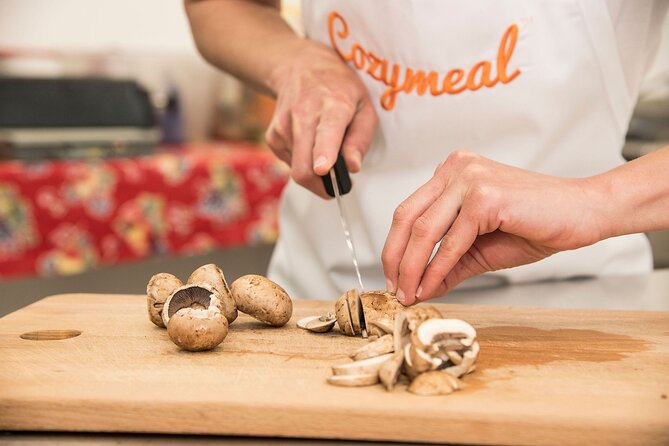
This class is a simple idea with surprisingly good results. You and your group are cooking the whole meal, course by course, with a chef guiding the technique and the timing. That means the evening stays active. You are not waiting for food to arrive, you are making it.
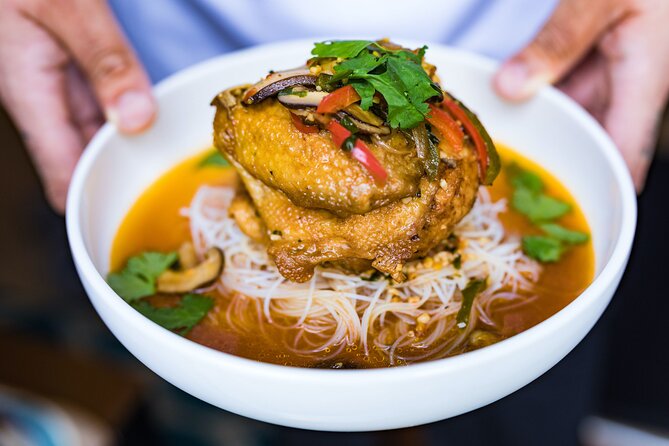
The “fusion” part is handled in a way that feels practical, not gimmicky. You get dumpling skills, adobo simmering, and then a rotating fusion dish that can land closer to garlic noodles or noodle soup with beef balls and bok choy. Even if you are not a fusion expert, the flavors make sense as you cook them.
You also get a homey vibe. One family-style experience described it as feeling like a home setting, not a sterile demo kitchen. And that matters. When the atmosphere is relaxed, you tend to ask better questions, and you learn more.
Price and Value: What $145 Covers (and What It Costs You)
At $145 per person for about 2 hours 30 minutes, you are paying for three things at once: ingredients for a full four-course meal, chef-led instruction, and a small-group cooking environment.
Here is how the value usually shakes out in real life:
- You get a real meal structure. Starters, mains, a side, and dessert means you are not leaving hungry or spending extra at a nearby spot.
- You get instruction. Even basic technique tips can save you time later when you cook at home.
- You get scale control. With a max 8-person class, you typically get more individual feedback than you would in a bigger class.
The only add-on cost to think about is alcohol. This is a BYOB event, meaning you can bring wine or beer, but you are not buying it here. If you want a drink pairing, plan to pick it up before you arrive.
Where to Meet at 90 Alvarado St, and How to Arrive Without Stress
The class starts at 90 Alvarado St, San Francisco, CA 94110, and it ends back at the same meeting point. That makes the logistics easy. You do not need to figure out public transit after your meal, and you do not have to run across town at the end.
Timing is the bigger deal. One practical tip from a past participant: do not arrive early, the class starts right on the booked time. That is useful to know. If you show up too soon, you might end up waiting around instead of getting settled. If you want to kill time, plan a short walk and keep it simple.
Since the class is about 2.5 hours, arriving even 10 to 15 minutes late can stress the flow. If you are trying to make it work with other plans that evening, give yourself a buffer. San Francisco schedules can be unpredictable.
The Four-Course Menu: What You Cook, What You Learn, What You Eat
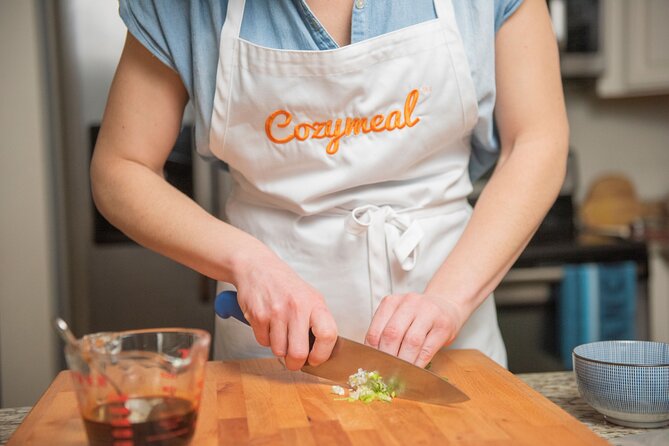
The menu is built around clear technique, then it adds flavor variety through the fusion theme. You are not just tasting; you are assembling and cooking.
Compare another route before the day is fixed:
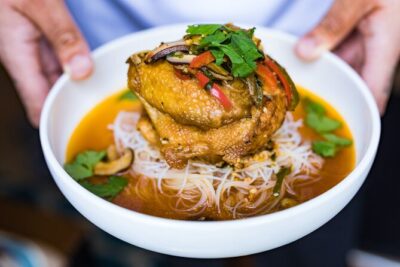
Starter: Bamboo Basket Dumplings and Dipping Sauce Craft
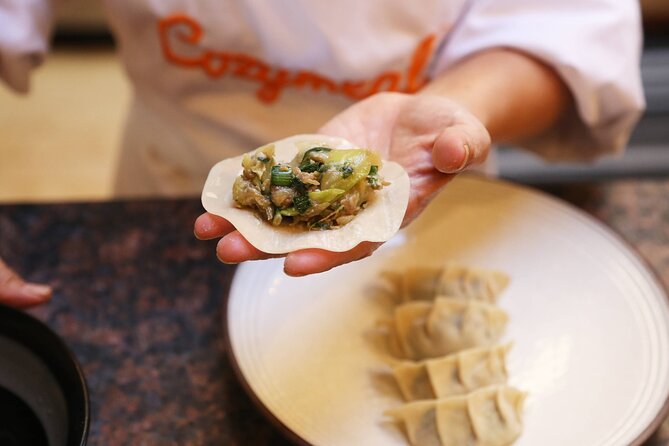
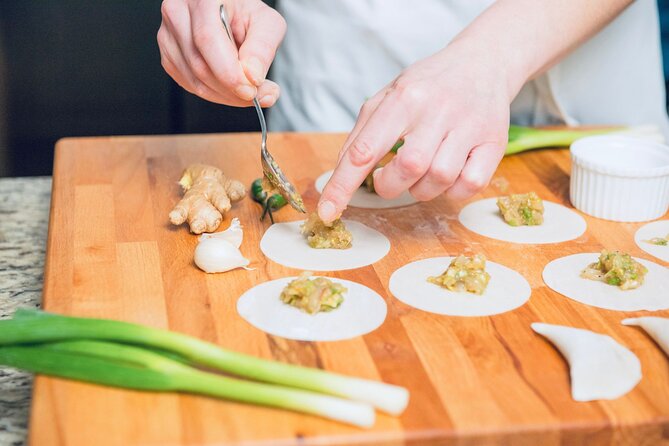
Your first course is bamboo basket steamed dumplings with dipping sauces. The dumplings have seasoned filling, and the sauces are part of the experience, not an afterthought.
What you learn here is useful at home:
- Steaming dumplings changes texture compared with boiling or pan-frying.
- Sauce balance is its own skill. You will adjust flavor through dipping sauces that are made for the dumplings, not generic store-bought options.
This is also a great course for skill building because it is interactive. Dumplings are forgiving in a class setting, and they reward attention. One surprise-dinner experience centered on learning dumplings, and it clearly landed because it turned into a hands-on memory moment.
Main Course: Philippine Chicken Adobo (Garlic, Soy, Vinegar, and Bay Leaf)
Next up is Philippine chicken adobo with garlic, soy sauce, and vinegar, plus bay leaves. Adobo is one of those dishes where the simmering does a lot of the work, but technique still matters.
This course teaches you a few practical lessons:
- How the sauce builds depth when you simmer, not when you rush.
- Why the blend of soy and vinegar creates that savory-sweet balance.
- How garlic and bay leaf shape aroma, even if you are not chasing spicy heat.
If you cook at home, this is the course that most often turns into a repeat dish later. It is flavorful, not fussy, and you will understand the mechanics by the time you plate it.
Chef’s Fusion Dish: The Rotating Course You Watch Closely
Then comes the fun curveball: a chef’s Asian intercontinental fusion selection based on seasonality and fresh ingredients.
Examples you might see include garlic noodles or a noodle soup with beef balls and bok choy. Because this course rotates, you should treat it as the class’s wildcard. Instead of hoping for a single exact dish, focus on learning the chef’s approach: how they build flavor quickly, how they manage texture in noodles, and how they balance the veggies.
This is also where that “engaging chef” factor shows up. In one experience, the chef was described as engaging, clear, and funny. When the chef keeps things lively during a rotating course, you stay focused, and you can actually pick up the steps.
Side Choice: Basmati, Saffron Risi e Bisi, or Garlic Rice
You also choose a rice side:
- White basmati
- Saffron risi e bisi
- Garlic rice
This part might sound simple, but it affects your whole plate. If you want a lighter, nutty base, basmati makes sense. If you want something creamier and more Italian-influenced, saffron risi e bisi is the crossover. If you want punchy comfort, garlic rice does the job.
From a value angle, this is smart because it gives you control. For the same price, you can adjust the flavor direction to match your mood.
Dessert: Seasonal Caramelized Fruits, Ice Cream, and Citrus
To wrap, you get seasonal caramelized fruits with ice cream and citrus. Dessert here is not just sweet, it has contrast built in. The citrus brightens the caramel, and the ice cream cools everything down.
This course also closes the loop on plating. After cooking dumplings and mains, you see how the chef puts a finishing touch on a composed plate. If you care about presentation, this final step is where you feel the “plating skills” promise.
Group Size, Coaching Style, and Why the Room Matters
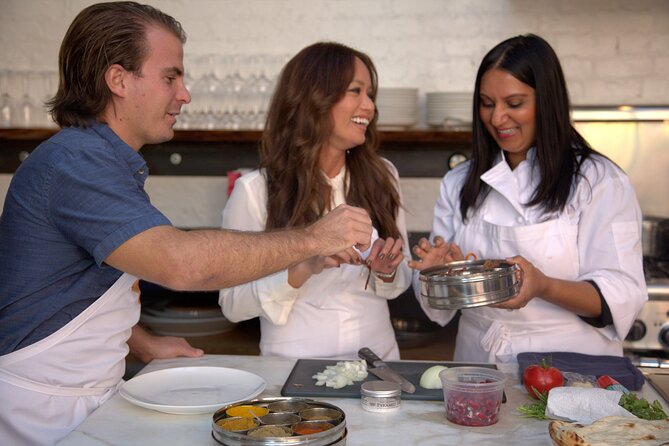
One of the most practical perks is the max 8 guests setup. When class sizes are small, chefs can correct technique while you’re still at the step that matters. That might mean adjusting sauce flavor before it sets, or helping you understand timing for steaming dumplings.
It also changes the tone. A class described as family-like and home-atmosphere usually means the chef is comfortable teaching questions, not just running a scripted demo. In one named example, Dirk kept a family group engaged the entire time, and people came away feeling they learned new skills, not just made food.
That is what you want from a cooking class. You want confidence. Not just a full stomach.
BYOB in San Francisco, and How to Pair Without Overthinking
This is a BYOB event, so you can bring wine or beer to enjoy during the class. That does two things for your evening:
- It makes the experience feel more like a meal with friends, not a formal ticketed workshop.
- It lets you choose your own pairing comfort zone.
I’d keep it simple. Dumplings love bright and clean drinks. Adobo already has savory and tangy notes, so you do not need a super delicate wine to enjoy it. And the dessert, with caramel and citrus, is a good place for something slightly sweet or something that cuts through with acidity.
The only caution is to pace yourself. You are cooking for 2.5 hours. If you plan to bring alcohol, consider having sips rather than big pours during the hands-on part.
Dietary Needs: What You Should Tell Them
This class is designed to accommodate a variety of dietary needs. The key practical move is this: let the provider know in advance so they can tailor the experience to your preferences and restrictions.
That does not guarantee every restriction can be handled perfectly, since the menu structure has specific dishes and ingredients. But the important point is that they expect diet questions ahead of time, and they will do their best to adjust.
If you have a serious allergy, you should treat the message as urgent and specific. Tell them exactly what you avoid, and ask how they handle cross-contact. The data here only confirms accommodation efforts, not the details of substitutes, so clarity matters.
Who This Class Is Best For (and Who Might Skip It)
This experience works especially well if you want:
- A hands-on evening where you cook a full meal, not just watch.
- A small-group setting where questions are easier to ask.
- A menu that mixes Asian flavors with European-style comfort (rice choices like risi e bisi help with that crossover).
It’s also a strong choice for a date or a special occasion. One couple used it as a surprise and focused on dumplings, and that suggests the class makes a memorable shared activity, not only a dinner.
Who might consider a different option?
- If you have very specific “must cook” expectations for the chef’s rotating fusion dish, you might prefer a class where the menu is fixed.
- If you do not want to bring anything, remember it is BYOB, so you either plan your own drinks or go with no alcohol.
Should You Book This Asian-European Fusion Cooking Class?
Book it if you want a real cooking lesson with a full meal attached, in a small group where the chef can guide you through steaming, simmering, and plating. The value at $145 is strongest when you factor in the four-course meal and the instruction time, not just the food you eat.
I’d also book if you like the idea of making dumplings and adobo, then adding a rotating fusion course that teaches you how chefs build flavor across cuisines. That menu structure makes the evening feel both familiar and new.
Skip it only if you hate uncertainty in the chef’s fusion course, or if BYOB planning is a hassle for you. Otherwise, this is the kind of class that leaves you with skills you can actually repeat.
FAQ
How long is the Asian-European fusion cooking class?
It runs about 2 hours 30 minutes (approx.).
What is the price per person?
The price is $145.00 per person.
How many people are in the class?
The class is limited to 8 participants, and the overall activity has a maximum of 25 travelers.
Is it BYOB, or are drinks included?
It is BYOB. You are welcome to bring wine or beer.
Where do I meet for the class?
The start location is 90 Alvarado St, San Francisco, CA 94110, USA. The activity ends back at the meeting point.
What meals are included?
You will prepare and eat a four-course menu: bamboo basket dumplings with dipping sauces, Philippine chicken adobo, a chef’s rotating fusion dish, a rice side (white basmati, saffron risi e bisi, or garlic rice), and a dessert of seasonal caramelized fruits with ice cream and citrus.
Can you accommodate dietary needs?
The class is designed to accommodate a variety of dietary needs, and you should let them know in advance so they can tailor the experience.
Make Something in the City
- San Francisco Whiskey Cocktail Class: Views and City History★ 5.0 · 206 reviews
- San Francisco’s Essential Chocolate Chip Cookie Workshop★ 5.0 · 31 reviews
- San Francisco: Turkish Mosaic Lamp Workshop★ 4.2 · 12 reviews
- San Francisco: Local Distillery Cocktail Class★ 4.9 · 11 reviews
- San Francisco: Dumpling Cooking Class & 3-Course Dinner★ 5.0 · 10 reviews
- Rug Tufting Workshop★ 5.0 · 6 reviews
More Tour Reviews in San Francisco
- Muir Woods and Sausalito (Return by Bus or Ferry)★ 4.5 · 5,098 reviews
- Big Bus SF: Hop-on Hop-off Tour with 17 Stops and Sunset Option★ 4.0 · 4,539 reviews
- Napa and Sonoma Wine Country Full-Day Tour from San Francisco★ 4.5 · 4,455 reviews
- Small Group Yosemite and Giant Sequoias Day Trip from San Francisco★ 5.0 · 3,671 reviews
- San Francisco: Golden Gate Bay Cruise★ 4.7 · 3,644 reviews
- San Francisco: Hop-On Hop-Off Sightseeing Tour with 17 Stops★ 4.5 · 3,600 reviews
Make, Mix and Taste
- San Francisco Whiskey Cocktail Class: Views and City History★ 5.0 · 206 reviews
- VIP Haunted Hotel Experience: Ghost Hunting plus Cocktail★ 5.0 · 35 reviews
- San Francisco’s Essential Chocolate Chip Cookie Workshop★ 5.0 · 31 reviews
- San Francisco: Turkish Mosaic Lamp Workshop★ 4.2 · 12 reviews
- San Francisco: Local Distillery Cocktail Class★ 4.9 · 11 reviews
- San Francisco: Dumpling Cooking Class & 3-Course Dinner★ 5.0 · 10 reviews
Fresh arrivals for a San Francisco itinerary
- San Francisco: Tour De San Francisco (Electric Bike Tour)
★ 4.7 · 3 reviews - Private Exploration of the Birds of San Francisco
★ 5.0 · 4 reviews - Zion, Bryce, Antelope, Grand Canyon, Las Vegas 6-Day Tour from SF
★ 5.0 · 3 reviews - Private Tour of Yosemite a Two Day Exploration
★ 5.0 · 4 reviews - The Presidio: Main Post to the Golden Gate Bridge
★ 5.0 · 3 reviews - Alcatraz Island Tour with San Francisco Bay Tour
★ 3.5 · 4 reviews
More ways into Cooking, Cocktails & Creative Workshops
 ★ 5.0San Francisco Whiskey Cocktail Class: Views and City HistoryFrom $69206 reviews
 ★ 5.0VIP Haunted Hotel Experience: Ghost Hunting plus CocktailFrom $11535 reviews
 ★ 5.0San Francisco’s Essential Chocolate Chip Cookie WorkshopFrom $9931 reviews
 ★ 4.2Turkish Mosaic Lamp WorkshopFrom $9912 reviews
 ★ 4.9Local Distillery Cocktail ClassFrom $4911 reviews
 ★ 5.0Dumpling Cooking Class & 3-Course DinnerFrom $13510 reviews
 ★ 5.0Rug Tufting WorkshopFrom $996 reviews
 ★ 5.0Chocolate Chip Cookie WorkshopFrom $995 reviews
Try another angle on the same itinerary