
REVIEW · SAN FRANCISCO TASTINGS & FOOD WALKS
San Francisco: Dumpling Cooking Class & 3-Course Dinner
Dumplings start with dough and patience. This hands-on San Francisco class turns you from dumpling novice into someone who can knead, roll thin wrappers, and pleat with confidence, all while Chef Eddie teaches in plain, step-by-step English. I really liked the recipe guide you take home, so the class does not end when you walk out the door.
You also get a full 3-course meal built around the dumplings you made, plus a soy-forward pork dish and a red bean finish. The only drawback to consider is the price, at $135 per person it is not a budget dinner, so go for the full experience, not just the food.
Key takeaways before you go
- Small group (max 8) means you get feedback while you work, not just a demo you watch.
- Blind soy tasting helps train your palate before you start cooking.
- Practice dough and pleating tricks make it easier to learn wrapper handling without panic.
- You customize a dipping sauce, then use it with the dumplings you made.
- Shanghainese-style pork belly braise plus red bean dessert rounds out the meal beyond dumplings.
Dumplings, sourdough and another edible neighborhood

Arriving at 555 Fulton St and Meeting Chef Eddie
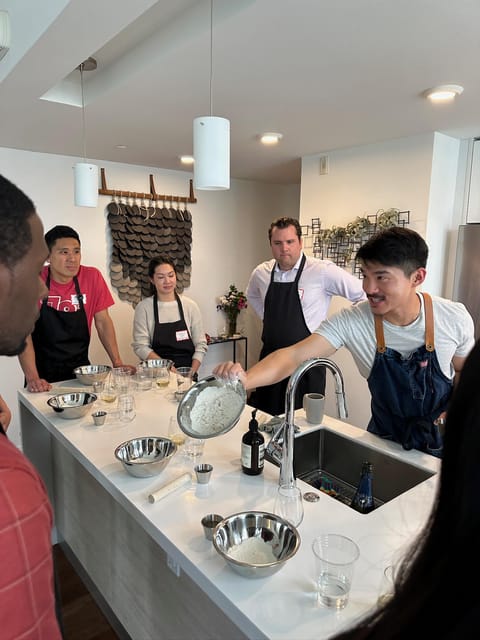
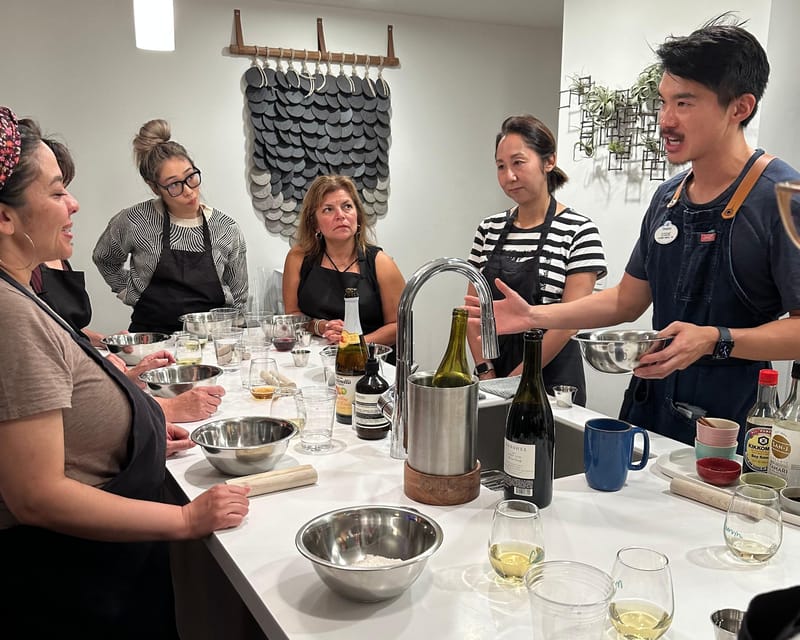
This experience begins right in the middle of San Francisco’s everyday life, at 555 Fulton St. You will be greeted in the building lobby by Chef Eddie in an apron, about five minutes before your start time. The building also houses a Trader Joe’s, so it helps to aim for the main lobby entrance.
What I like about this setup is how practical it feels. There is no mysterious back room or “follow this person down a hall” vibe. You show up, get oriented, and get cooking.
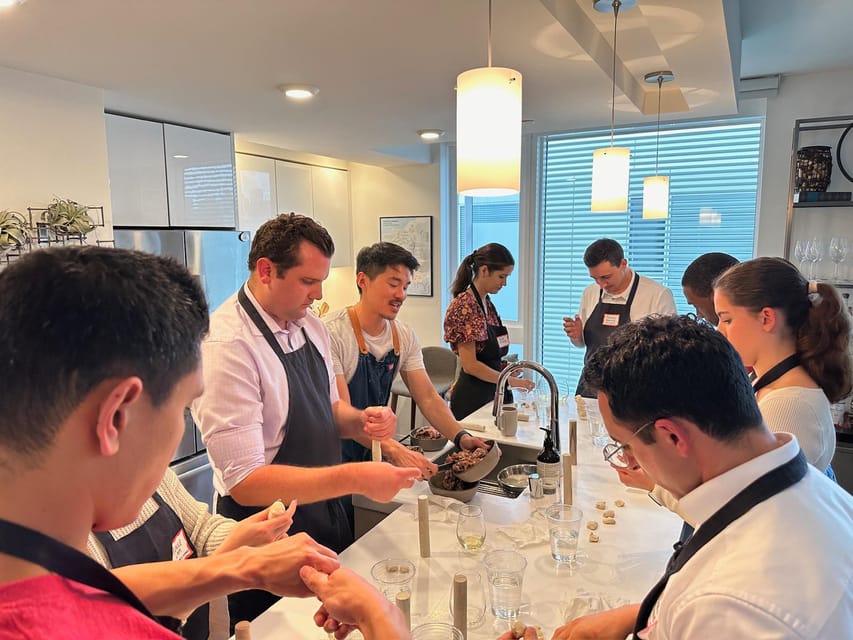
The group stays intentionally small, limited to 8 participants, which matters more than you might think. Dumpling technique is hands-on. With fewer people, the instructor can correct how you pinch pleats, how thick your wrapper is getting, and how you seal the edge so your dumplings hold together.
The Blind Soy Tasting That Sets the Flavor Bar
Before anyone touches dough, you start with a blind tasting of the chef’s favorite soy sauce. This is not just a fun warm-up. It trains your palate to notice differences in saltiness, sweetness, and that deep fermented umami flavor soy is famous for.
That matters because dumplings and sauces live or die by balance. If the soy you use later tastes flat or too salty, everything built on top of it feels off. Starting with a blind taste gets you thinking like a cook, not like a diner.
Then the class moves into the hands-on part, where all that flavor awareness turns into choices. You are learning the dumpling process, but you are also learning how flavor layers get built.
Dumpling Dough 101, From Kneading to Resting
Your main job at the start is the dough: kneading, resting, and shaping into workable pieces. You will practice the rhythm of turning and pressing the dough so it becomes smooth and elastic. Then you let it rest, because resting is where gluten relaxes and wrappers get easier to roll thin without tearing.
This is one of the places where the teaching style really shines. During dough resting time, you do not just wait. Chef Eddie uses a rough practice dough so you can still work on the motions. One person might be learning how to break off consistent pieces, while another practices rolling without rushing the real dough stage.
I also like that the class is structured so you keep moving. In a typical cooking class, you can feel stuck watching the clock. Here, you keep your hands busy and your brain engaged.
Rolling Thin Skins and Pleating Dumplings Like You Mean It
Rolling dumpling skins sounds simple until you try it. Thin wrappers need even pressure. Too thick in the center and the dumpling feels heavy. Too thin at the edges and it can rip when you fold and seal.
Chef Eddie focuses on the core technique: rolling thin skins and then pleating. Pleating is where confidence shows. It is also where beginners usually get nervous, because it looks decorative but it is also functional. Better pleats help the dumpling seal and hold its shape.
To make this less intimidating, you practice pleating first using playdoh. That might sound goofy until you realize why it works. The tool has no consequences. If your folds are uneven, you can try again immediately and focus on hand placement and spacing rather than worrying about whether wrappers will tear.
A helpful detail is a camera projection that shows what Chef Eddie’s fingers are doing onto a larger screen. Watching your own hands is useful, but watching the exact finger motion turns feedback into something you can copy right away. The result is that your dumplings have a much better chance of coming out intact.
Mix, shape or make something before the evening ends

Filling Choices: Pork Stuffing or Tofu-Based Dumplings
Once your wrappers are workable, you move on to stuffing. You can go with a family recipe pork stuffing or choose a tofu-based option. That choice is valuable because it lets you match the dumpling experience to your own preferences.
Pork filling brings the classic comfort angle, rich and savory. Tofu-based stuffing leans lighter and still satisfying, which can be a nice contrast if you want the meal to feel balanced.
Either way, the key skill you practice is portioning and sealing. You learn where to place the filling, how not to overload, and how to close the edges so pleats stay put.
And yes, you will actually make a batch of dumplings. Not just shape one for a photo and call it a day. You work through enough dumplings that you get the feel of the process end-to-end.
The Secret Dipping Sauce You Create
After you finish shaping your dumplings, you get to make your own secret dipping sauce. This is one of those parts that sounds small until you realize how much it changes your final bite.
You are not just mixing ingredients. You are learning how sauces are adjusted to complement soy-forward flavors and the richness of cooked fillings. A dumpling wrapper is mild, then the filling brings savory depth, and the sauce gives the finishing edge.
The class includes multiple sauces to taste along the way, so you learn how different dipping styles can shift the same dumpling from cozy to punchy to more savory. You then apply what you like to your own blend and take that instinct home with you.
The 3-Course Meal: Pork Belly Braise and Red Bean Finish
The food portion is not an afterthought. It is designed as a payoff for the skills you just practiced.
Course 1 and the dumpling centerpiece
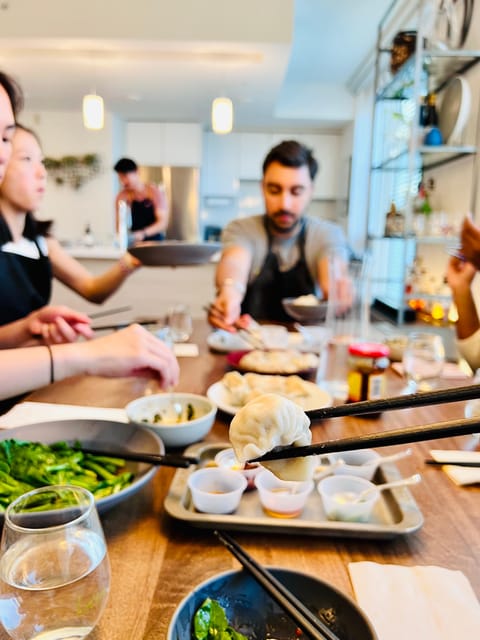
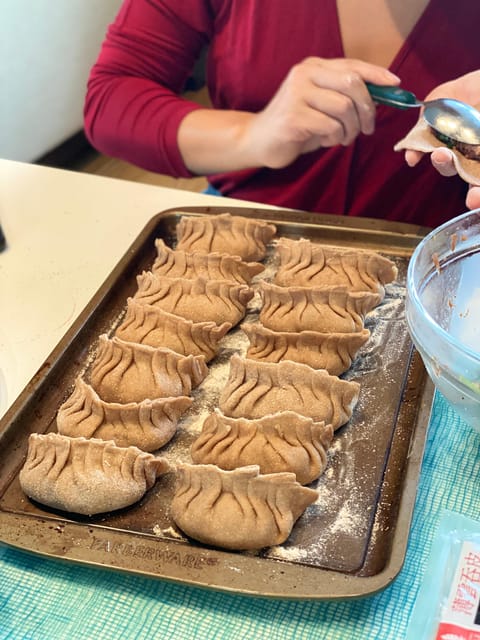
Your dumplings are served as the centerpiece of the meal, paired with the sauces you have been tasting and your own dipping creation. This is the moment where you can finally evaluate your work in a way that matters, wrapper texture, seal strength, and how the flavor comes through as you bite.
If you like the dumplings you made, you will also understand why certain pleating choices mattered. If one dumpling looks less perfect, you still get to learn from it, because now you can link shape to bite and texture.
Course 2: Shanghainese pork belly braise
For the next course, you move to a classic Shanghainese-style pork belly braise. The focus here is soy sauce umami, and you can taste how the sauce turns into something deeper and more rounded as it braises.
This dish matters because it gives you a second way to think about soy beyond the dipping bowl. Soy is not one flavor. It is a flavor engine. When it cooks low and slow, it becomes rich, almost sweet, and it clings to the pork in a way that feels different from straight soy.
Course 3: red bean dessert
You end with a red bean dessert. Red bean is a common finale in many East Asian sweets, and it is a comforting closer because it balances the savory meal with something warm and softly sweet.
It also keeps the meal from feeling one-dimensional. After working with soy, pork, and dough all evening, the dessert gives your palate a clean reset.
What You Actually Take Home: Recipe Guide and Repeatable Skills
One of the best parts of this class is the recipe guide you receive to take home. It is not just a souvenir folder. The structure of the class feeds directly into what you will use later: dough steps, wrapper handling, and the basic approach to filling and serving.
If you want to recreate dumplings at home, this is the difference between a fun night out and a skill you can repeat. The guide gives you a reference point when you try again later and wonder why your wrappers tore, why your pleats popped, or why the filling tasted a bit muted.
Chef Eddie also builds confidence through feedback during the class, which is another reason the technique sticks. You are not just doing it once. You are correcting in real time.
Price and Value: Is $135 Worth It in San Francisco?
Let’s talk about money plainly.
At $135 per person, this is a premium activity. But it is also not just a cooking demo or a one-bite tasting. You get a small-group, hands-on dumpling session plus a full 3-course meal made from what you prepared. You also get all materials and ingredients included, plus sauces, an instructor, and the recipe guide.
In other words, part of what you pay for is the teaching and the structured practice time. Dumpling technique is hard to learn solo because dough hydration, wrapper thickness, and pleating are so hands-on. The class compresses months of trial and error into one evening, with feedback while you work.
One more value point: you leave with a meal worth sitting down for. Many food experiences are “walk around and sample.” This one is a real meal, plated and meant to be enjoyed as you learn.
If you love cooking, food classes, and learning by doing, the price starts to make sense. If you only care about eating, you might decide it is easier to go for a restaurant dinner instead. But if you want dumpling skills, this is one of the more direct ways to get them.
Who This Dumpling Cooking Class Best Suits
This class fits a specific kind of traveler.
You will probably love it if you:
- Want a hands-on cooking experience rather than a sightseeing-only evening
- Enjoy learning technique you can repeat at home
- Are traveling as a couple or a small group and want an activity that feels social but not chaotic
- Like soy-forward flavors and want to understand how soy changes in different dishes
It is also a good pick if you appreciate patient teaching. Chef Eddie’s style comes through in the way participants keep going, adjusting, and finishing with dumplings intact.
One note on suitability: it is not suitable for children under 12. If you are traveling with kids, you will need to consider other options.
If you have pork preferences or dietary needs, you do have a tofu-based stuffing option mentioned in the class structure. If you have allergies, you should check directly with the operator before booking, since the data here only confirms the tofu versus pork stuffing choice.
Practical Tips for Your Dumpling Class Evening
A few practical points will help you get the most out of the evening.
First, expect to get flour on your hands. That is not optional. Wear something you do not mind getting a little messy.
Second, give yourself mental permission to be slow at the start. Dough handling takes a minute to click. The class includes practice time while dough rests, and using that time well helps you catch up.
Third, pay attention during the blind soy tasting. It is brief, but it trains your palate fast. You will notice the flavors later when you taste sauces and when you eat the pork braise.
Finally, if you plan to bring alcohol, know that BYOB is available. Wine can also be purchased at $30 a bottle if you do not want to carry anything. If you are bringing your own, just be sure you are comfortable with timing, since the class is 3 hours long and focuses on cooking first, eating second.
Should You Book This San Francisco Dumpling Class?
If you want a fun, skill-building evening with a real sit-down payoff, I think this is an easy yes. You are not just eating dumplings. You are learning dough, wrapper control, pleating, and dipping sauce building, then eating what you make with a soy-forward Shanghainese pork belly braise and a red bean dessert.
Book it if dumplings are your kind of food and you like learning by doing in a small group. Consider skipping or choosing something else if you are only looking for a low-cost meal, or if kids under 12 are part of your group.
For many people, this hits the sweet spot of San Francisco food travel: practical technique, local-style flavors, and an experience that leaves you with recipes you can actually use.
More Tour Reviews in San Francisco
- Muir Woods and Sausalito (Return by Bus or Ferry)★ 4.5 · 5,098 reviews
- Big Bus SF: Hop-on Hop-off Tour with 17 Stops and Sunset Option★ 4.0 · 4,539 reviews
- Napa and Sonoma Wine Country Full-Day Tour from San Francisco★ 4.5 · 4,455 reviews
- Small Group Yosemite and Giant Sequoias Day Trip from San Francisco★ 5.0 · 3,671 reviews
- San Francisco: Golden Gate Bay Cruise★ 4.7 · 3,644 reviews
- San Francisco: Hop-On Hop-Off Sightseeing Tour with 17 Stops★ 4.5 · 3,600 reviews
Make, Mix and Taste
- San Francisco Whiskey Cocktail Class: Views and City History★ 5.0 · 206 reviews
- VIP Haunted Hotel Experience: Ghost Hunting plus Cocktail★ 5.0 · 35 reviews
- San Francisco’s Essential Chocolate Chip Cookie Workshop★ 5.0 · 31 reviews
- San Francisco: Turkish Mosaic Lamp Workshop★ 4.2 · 12 reviews
- San Francisco: Local Distillery Cocktail Class★ 4.9 · 11 reviews
- Rug Tufting Workshop★ 5.0 · 6 reviews
Eat Across San Francisco
- San Francisco Authentic Food Tour with 5 Locals Favorites Dishes★ 5.0 · 852 reviews
- San Francisco: Chinatown Culinary Walking Tour★ 4.8 · 265 reviews
- San Francisco: North Beach and Little Italy Food Tour★ 4.8 · 188 reviews
- Mission District Food Tour: Appetizers, Entrée and Dessert★ 5.0 · 182 reviews
- Exclusive North Beach Food Tour in San Francisco★ 5.0 · 162 reviews
- SF’s Chinatown: Tea & Dim Sum Food Tour – Includes full meal, 3hr★ 5.0 · 153 reviews
Fresh arrivals for a San Francisco itinerary
- San Francisco: Tour De San Francisco (Electric Bike Tour)
★ 4.7 · 3 reviews - Private Exploration of the Birds of San Francisco
★ 5.0 · 4 reviews - Zion, Bryce, Antelope, Grand Canyon, Las Vegas 6-Day Tour from SF
★ 5.0 · 3 reviews - Private Tour of Yosemite a Two Day Exploration
★ 5.0 · 4 reviews - The Presidio: Main Post to the Golden Gate Bridge
★ 5.0 · 3 reviews - Alcatraz Island Tour with San Francisco Bay Tour
★ 3.5 · 4 reviews
More ways into San Francisco Tastings & Food Walks
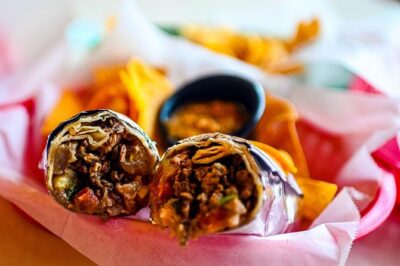 ★ 5.0San Francisco Authentic Food Tour with 5 Locals Favorites DishesFrom $87852 reviews
 ★ 4.8Chinatown Culinary Walking TourFrom $84265 reviews
 ★ 4.8North Beach and Little Italy Food TourFrom $84188 reviews
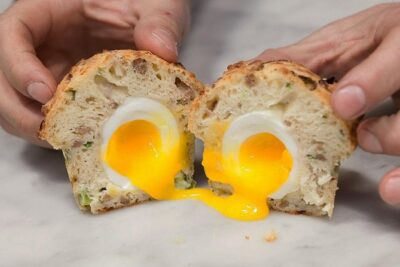 ★ 5.0Mission District Food Tour: Appetizers, Entrée and DessertFrom $115182 reviews
 ★ 5.0Exclusive North Beach Food Tour in San FranciscoFrom $115162 reviews
 ★ 5.0SF’s Chinatown: Tea & Dim Sum Food Tour – Includes full meal, 3hrFrom $99153 reviews
 ★ 4.5San Francisco Combo: Ferry Building Food Tour and AlcatrazFrom $181152 reviews
 ★ 4.8Food Walking Tour of Chinatown & North BeachFrom $94148 reviews
Try another angle on the same itinerary