
REVIEW · CHINATOWN FOOD & HERITAGE WALKS
San Francisco Chinatown Food and Culture Tour
There is a lot packed into two hours. This San Francisco Chinatown Food and Culture Tour pairs easy walking with real neighborhood stories, from early community life to the aftermath of the 1906 earthquake. I especially like how the guide keeps it un-rushed and points out details you would otherwise miss, like painted balcony facades and the alley history.
My favorite part is the food flow. You start with treats from a go-to local bakery, then settle in for an included dim sum spread with steamed, baked, and fried dumplings, plus a local vibe that feels like a normal day in Chinatown, not a performance.
One thing to consider is that you are walking for about two hours. If you hate crowds or you need extra breaks, plan for slow moments and wear comfortable shoes, because Chinatown sidewalks are what they are.
Key things to know before you go
- Small group size (max 15): more time for questions and pacing that does not feel hurried.
- Three distinct food moments: bakery pastries first, then a full dim sum dumpling stop later.
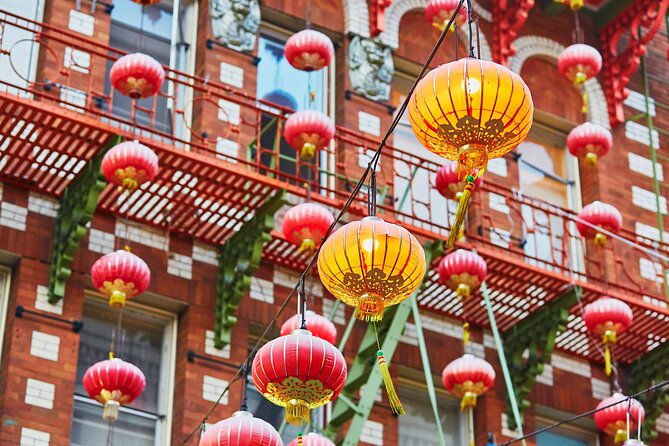
- You see why Chinatown looks the way it does: painted balconies, bold architecture, and temple history.
- Stories connect people to place: missionaries, political leadership, gold rush immigration, and 1906 rebuilding.
- Surprising ending location: redwoods at Transamerica Redwood Park, right under a major SF landmark.
- Diet option for dim sum: the dim sum restaurant can offer vegan dumplings if you tell your guide.
Alleys, bakeries and the stories behind Grant Avenue

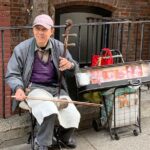
Entering San Francisco Chinatown with a food-and-story rhythm
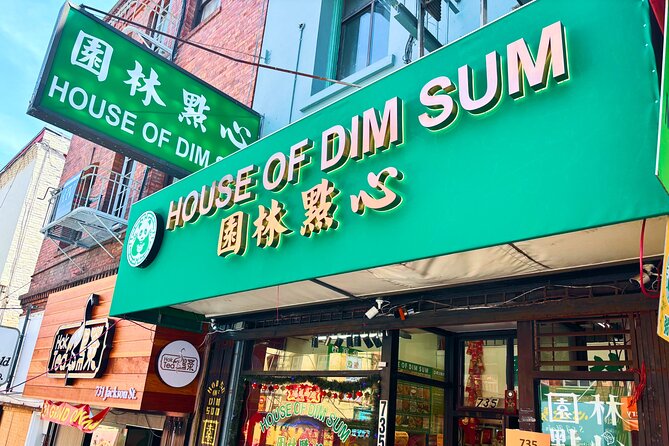
San Francisco Chinatown can feel like sensory overload in a good way. The best tours here do two jobs at once: they help you find your way, and they explain what you are actually looking at. This one does that with a simple rhythm, walk a short stretch, then stop for food or a key cultural landmark.
I like that it is built for a short afternoon, not a long day. You start at Woh Hei Yuen Park and spend about 2 hours totaling walking time, with plenty of short stops along the way. The pacing matters because you are tasting multiple items, and you want enough time to actually enjoy them, not just grab and rush.
A helpful bonus is the mobile ticket, which keeps check-in friction low. And because the group is capped at 15, it feels more like a guided neighborhood stroll than a factory-style tour.
The food stops that make this tour worth $49
At $49, the value is not just that you get snacks. It is that your food stops are spaced to teach you how Chinatown food culture works. You do not only eat, you get context for why certain items are common here and what role the neighborhood’s everyday businesses play.
AA Bakery and Cafe: your first sweet and savory hit
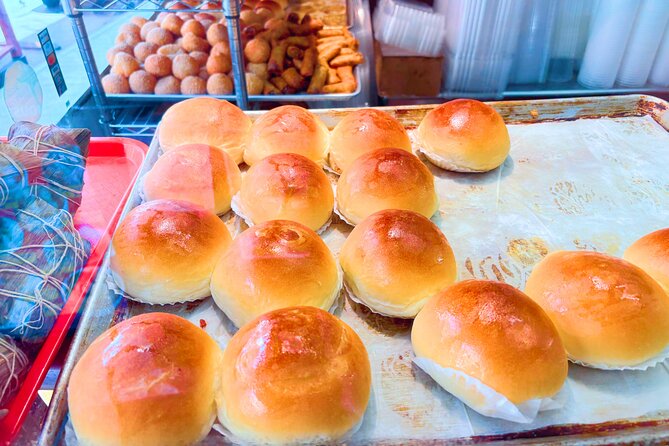
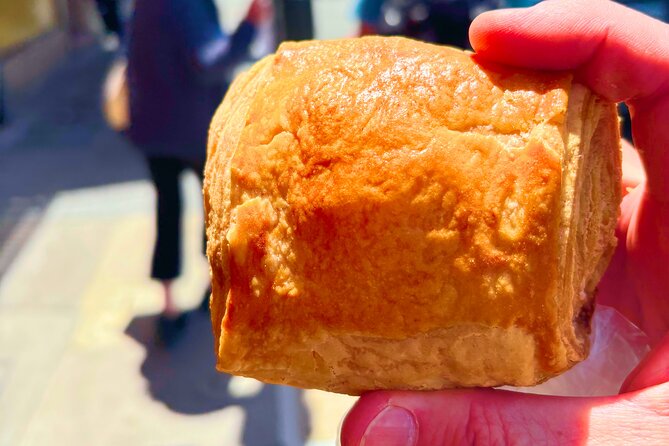
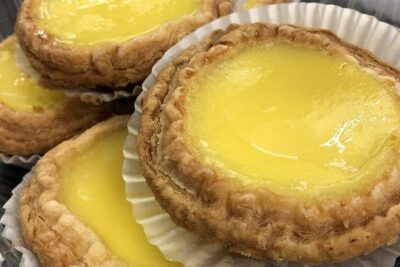
Your first real tasting stop is AA Bakery & Cafe, with roughly 15 minutes to sample classic Chinatown treats. Expect items like buns, egg tarts, sesame balls, and other bakery specialties. Even if you have eaten Chinatown food before, this is the kind of stop that helps you notice details, like textures and flavors that are different from what you might find outside the neighborhood.
Practical tip: bakery items are great for easing you into the tour. But do not go too heavy here if you know you will want dumplings later. This tour times it so the dim sum meal stop feels satisfying, not stuffed.
House of Dim Sum: the main event
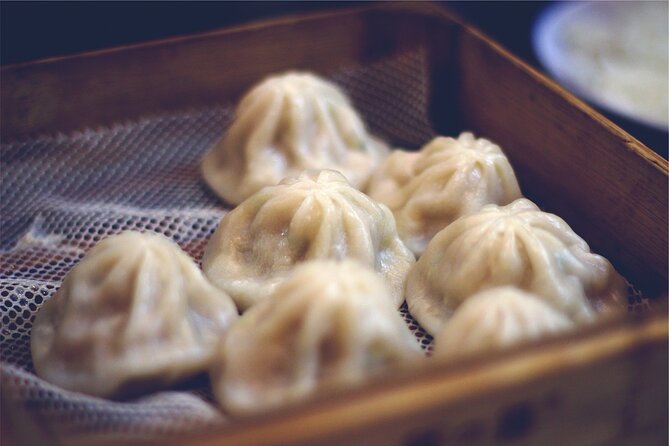
The centerpiece food stop is House of Dim Sum, where you get an included variety of dumplings in a mix of styles: steamed, baked, and fried. This is one of the clearest value pieces in the tour because it is more than a single snack. You are basically getting a structured dim sum experience with multiple types, which is the exact way many people first learn to appreciate dim sum.
Diet note: the restaurant can offer vegan dumplings. You just need to tell your guide what you prefer, ahead of or during the tour. If you are on a plant-based diet, this is the kind of heads-up that makes or breaks a food tour.
Dumplings, sourdough and another edible neighborhood
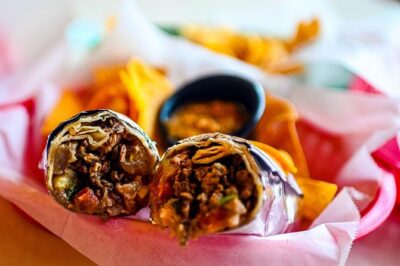
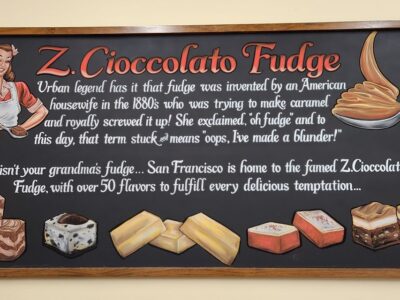
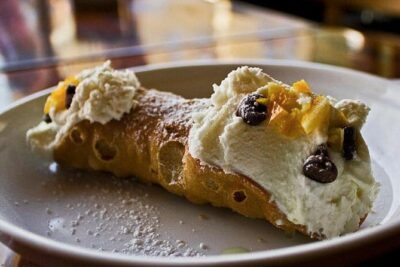
Budget for extra cravings, but you do not have to
If you want to buy more food beyond what is included, the recommendation is around $20. That tells you the tour is designed as a sampler with a full dumpling stop, not an all-you-can-eat plan.
Woh Hei Yuen Park and Gum Moon Residence Hall, where community starts
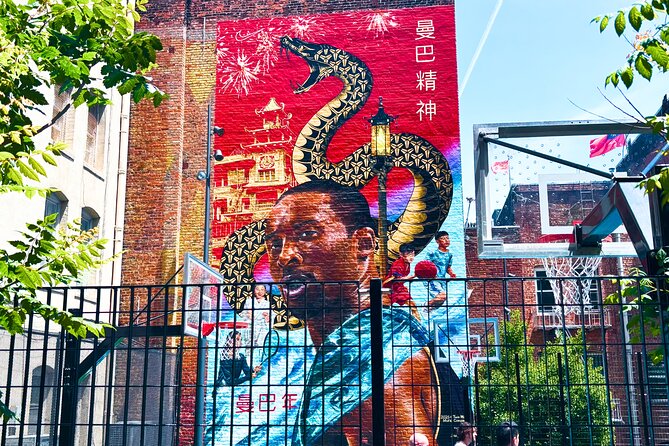
The early stops are about more than scenery. They set the stage for how the neighborhood grew, how people found support, and why certain community institutions mattered.
Stop 1: Woh Hei Yuen Park
You begin at Woh Hei Yuen Park, a picturesque spot that can feel surprisingly calm for a neighborhood that is famous for action. One of the small details you might catch here is people dancing to traditional Chinese music. That matters, because it signals the neighborhood is still a living community, not only a photo backdrop.
Stop 2: Gum Moon Residence Hall
Next is Gum Moon Residence Hall, which helps explain the role of Christian missionaries in Chinatown. The focus is on how some missionaries advocated, educated, and sometimes sheltered people in the community. It is one of those moments where the tour connects big-picture history to daily survival and social support.
What I like here is the balance. Chinatown history can get simplified into food, festivals, and architecture. This stop keeps the human angle front and center, so later political and rebuilding stories feel grounded.
Waverly Place, painted balconies, and the political voice of Chinatown
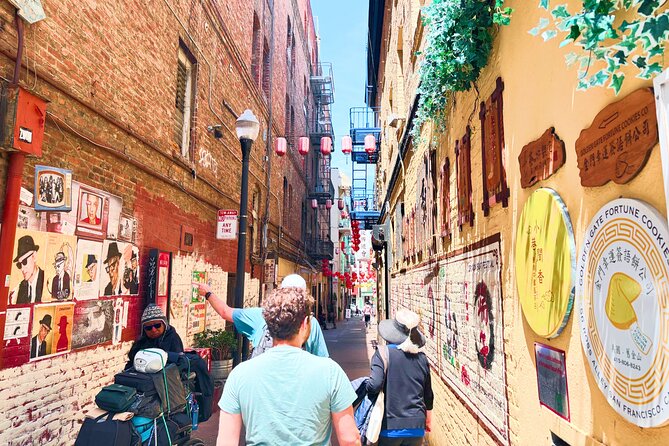
After you get your footing, the tour moves into visual highlights that also carry real meaning.
Waverly Place painted balconies and an old temple
As you walk the “street of painted balconies,” you are looking at one of Chinatown’s most recognizable features. The balconies are eye-catching on photos, but your guide frames them as something more than decoration, part of how people expressed identity and community presence.
You also see the oldest Chinese temple in town. That detail anchors the neighborhood in continuity, showing how religious and cultural life stayed central even as Chinatown changed over time.
Chinatown-Rose Pak Station: a name you should know
One of the most concrete political stops is Chinatown-Rose Pak Station. You hear about the woman who amplified Chinatown’s political voice, including her role in helping bring SF’s first Chinese American mayor to office and tying the neighborhood to the city’s subway expansion.
This part is valuable because it shows Chinatown is not only a historic district. It is connected to the civic choices of the present. The station stop also gives you a break from constant storefronts and lets the guide explain how infrastructure and political representation can change what a neighborhood can do.
Ross Alley fortune cookies and the alley stories you remember
If Chinatown has a single “I have seen this on postcards” alley moment, it is Ross Alley. Here, the tour focuses on a fortune cookie factory and the alley’s colorful past.
You stop by a fortune cookie factory, and the guide layers in the story of criminal gangs who once prowled the alleys. Whether you love street history or you normally skip it, this stop helps you understand why Chinatown’s side streets feel like their own world. The alley layout, the pedestrian flow, and the way businesses cluster all reflect how people lived and moved through the neighborhood in different eras.
Practical tip: fortune cookies are fun, but make sure you do not let the stop speed you through. This is one of the most story-heavy segments, so take a moment to listen, then enjoy your cookie.
Grant Avenue architecture: where politics and style meet
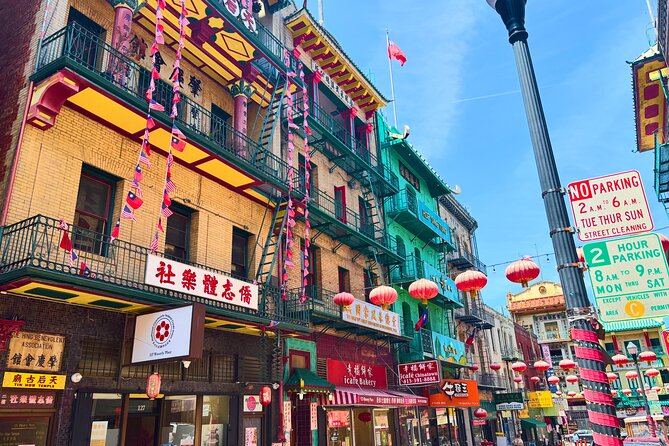
Next up is Grant Avenue, a major Chinatown artery known for striking buildings and bold, colorful architecture. This is the stop where the tour helps you read the street like a map.
The guide explains the story behind the architecture, and that is what makes this more than sightseeing. You start to see design choices as signals: who built what, what the neighborhood wanted to display, and how immigrants helped shape a sense of place.
If you care about design, this is your chance to slow down just a bit and look upward. Grant Avenue is the kind of street where details show up only after you stop trying to get from one end to the other.
1906 earthquake and Chinatown’s rebuilding, explained in human terms
A key thread running through the whole walk is how Chinatown responded after the 1906 earthquake and fire. The tour ties that disaster to everyday decisions people made afterward, including how the neighborhood rebuilt and what kinds of community strength emerged from that shock.
You might also hear connections to gold rush immigrants and political pioneers. The point is not to cram dates into your head. The point is to understand why Chinatown looks the way it does today. In a neighborhood with layers of buildings, temples, and food businesses, history is not behind glass. It is in the street plan and the way landmarks are positioned.
And that is why the guide’s storytelling style matters. One of the strongest themes from past experiences is that the history comes through clearly and without a rush. You end up with a better sense of why the neighborhood is iconic.
Ending at Transamerica Redwood Park: a quiet payoff
The tour ends at Transamerica Redwood Park in the shadow of the Transamerica office building. This is a smart finish. You spend the first part learning how Chinatown shaped itself through architecture, food, and community life. Then you step into a grove of redwoods that you might not expect to find right here.
It gives you a place to decompress without leaving the area. It is also a natural photo moment, because the contrast is the point: trees where you least expect them, close to one of the city’s best-known office landmarks.
Price and logistics: how to judge the value
At $49 per person for about two hours, you are paying for more than the food. You are paying for guidance that turns your stops into a story you can actually follow.
Here is what makes the math work in your favor:
- You get a bakery tasting and an included dim sum dumpling meal.
- The stops are clustered, which keeps you from spending most of your time walking long distances alone.
- The group size cap of 15 helps the guide maintain a steady pace, which is a big part of why people rate this so highly.
You also have a built-in planning advantage: this is set as an afternoon outing at 12:30 pm. That means you can think of it as lunch plus culture. If you are trying to avoid an extra sit-down meal, the included dim sum should help.
My main caution is simple: two hours is short, but the streets add up. Go in with comfortable shoes, a water bottle if you like, and an appetite for dumplings.
Who this tour fits best, and who might want a different option
This tour works especially well if you:
- Want a guided way to understand Chinatown beyond restaurants
- Like food tours that include enough variety to feel like a real meal
- Prefer a pace that is not constantly sprinting between stops
- Enjoy history that connects people to buildings, food, and civic life
You might choose something else if you:
- Really do not enjoy walking or crowded sidewalks
- Are only interested in one type of food and do not want a broader culture-and-stops format
That said, it is usually an easy entry point for most visitors because the tour is designed around short segments and frequent pauses.
Should you book this San Francisco Chinatown food and culture tour?
I would book it if your goal is both practical and memorable: learn your bearings in Chinatown and leave with a better understanding of the neighborhood, not just a full stomach. The strongest reason is the combination of well-paced storytelling and food that feels thoughtfully planned, especially the included steamed, baked, and fried dumplings.
If you are on the fence, decide based on your appetite and your patience for city walking. Two hours is manageable, and the route is set up so you are always moving toward something meaningful: a park, a historic site, a bakery, a political landmark, then dumplings, and finally redwoods.
FAQ
How long is the San Francisco Chinatown Food and Culture Tour?
It is about 2 hours of walking.
What does the tour cost?
The price is $49.00 per person.
What food is included in the price?
You’ll have bakery tastings (including items like buns, egg tarts, and sesame balls) and an included dim sum stop with a variety of steamed, baked, and fried dumplings.
Can the dim sum include vegan options?
Yes. The dim sum restaurant can offer vegan dumplings if you tell your guide you prefer this option.
Where does the tour start and end?
It starts at Woh Hei Yuen Park and ends at Transamerica Redwood Park (600 Montgomery St).
Is the tour group size limited?
Yes. The tour has a maximum of 15 travelers.
Is there free cancellation?
Yes, there is free cancellation. You can cancel up to 24 hours in advance of the experience for a full refund.
More Tour Reviews in San Francisco
- Muir Woods and Sausalito (Return by Bus or Ferry)★ 4.5 · 5,098 reviews
- Big Bus SF: Hop-on Hop-off Tour with 17 Stops and Sunset Option★ 4.0 · 4,539 reviews
- Napa and Sonoma Wine Country Full-Day Tour from San Francisco★ 4.5 · 4,455 reviews
- Small Group Yosemite and Giant Sequoias Day Trip from San Francisco★ 5.0 · 3,671 reviews
- San Francisco: Golden Gate Bay Cruise★ 4.7 · 3,644 reviews
- San Francisco: Hop-On Hop-Off Sightseeing Tour with 17 Stops★ 4.5 · 3,600 reviews
Eat Across San Francisco
- San Francisco Authentic Food Tour with 5 Locals Favorites Dishes★ 5.0 · 852 reviews
- San Francisco: Chinatown Culinary Walking Tour★ 4.8 · 265 reviews
- San Francisco: North Beach and Little Italy Food Tour★ 4.8 · 188 reviews
- Mission District Food Tour: Appetizers, Entrée and Dessert★ 5.0 · 182 reviews
- Exclusive North Beach Food Tour in San Francisco★ 5.0 · 162 reviews
- SF’s Chinatown: Tea & Dim Sum Food Tour – Includes full meal, 3hr★ 5.0 · 153 reviews
Through Chinatown’s Alleys and Kitchens
- Chinatown & North BeachLittle Italy: 7 Tastings & History★ 5.0 · 1,070 reviews
- Ghost Hunt in SF Chinatown with a Professional Investigator★ 5.0 · 922 reviews
- San Francisco Chinatown Walking Tour★ 5.0 · 778 reviews
- Chinatown Walking Tour: Food, History & Flavor★ 5.0 · 575 reviews
- San Francisco: Chinatown Culinary Walking Tour★ 4.8 · 265 reviews
- SF’s Chinatown: Tea & Dim Sum Food Tour – Includes full meal, 3hr★ 5.0 · 153 reviews
Fresh arrivals for a San Francisco itinerary
- San Francisco: Tour De San Francisco (Electric Bike Tour)
★ 4.7 · 3 reviews - Private Exploration of the Birds of San Francisco
★ 5.0 · 4 reviews - Zion, Bryce, Antelope, Grand Canyon, Las Vegas 6-Day Tour from SF
★ 5.0 · 3 reviews - Private Tour of Yosemite a Two Day Exploration
★ 5.0 · 4 reviews - The Presidio: Main Post to the Golden Gate Bridge
★ 5.0 · 3 reviews - Alcatraz Island Tour with San Francisco Bay Tour
★ 3.5 · 4 reviews
More ways into Chinatown Food & Heritage Walks
 ★ 5.0Chinatown & North BeachLittle Italy: 7 Tastings & HistoryFrom $961,070 reviews
 ★ 5.0Ghost Hunt in SF Chinatown with a Professional InvestigatorFrom $55922 reviews
 ★ 5.0San Francisco Chinatown Walking TourFrom $59778 reviews
 ★ 5.0Chinatown Walking Tour: Food, History & FlavorFrom $86575 reviews
 ★ 4.8Chinatown Culinary Walking TourFrom $84265 reviews
 ★ 5.0SF’s Chinatown: Tea & Dim Sum Food Tour – Includes full meal, 3hrFrom $99153 reviews
 ★ 4.8Food Walking Tour of Chinatown & North BeachFrom $94148 reviews
 ★ 5.0San Francisco Chinatown Food TourFrom $99138 reviews
Try another angle on the same itinerary