
REVIEW · SILICON VALLEY & TECH LANDMARKS
San Francisco Technology and History Tour: South of Market
San Francisco can feel like a riddle you solve on foot. This South of Market technology and history tour connects startups to urban renewal, all while you cruise through a flat, easy neighborhood on a 70-minute walk.
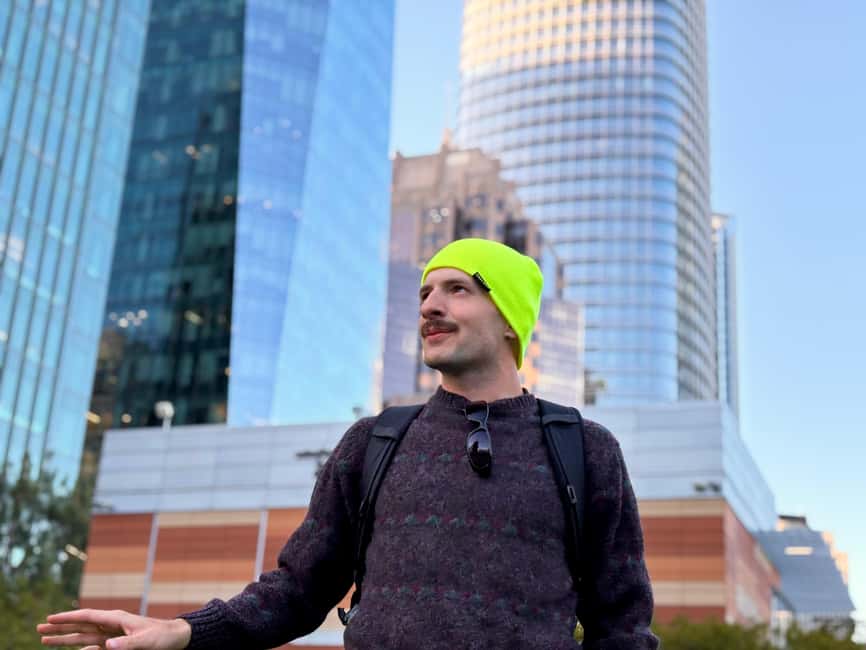
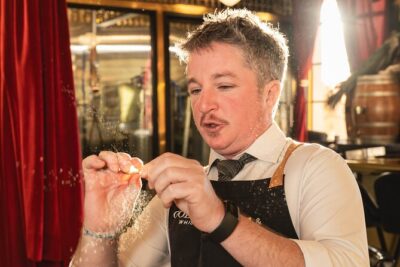
What I really like is how the guide, Wes, ties today’s tech ecosystem to what was here before, from gold rush camps to the first Instagram and Twitter offices in South Park. I also like the ending payoff: the rooftop garden at Salesforce Terminal, with skyline and Bay views, plus details like the Klockar’s blacksmith feature that nods to earlier metalworking life.
One consideration: it is a walking tour with interpretive stops, not a museum visit. If you are hoping for lots of indoor time or major ticketed attractions, this may feel like a quick, focused orientation rather than a long stop-and-stroll day.
Key Points You Will Remember
- Wes, a local guide, explains how San Francisco became a startup magnet, and he does it with specifics, not generalities.
- Flat SoMa route and wheelchair accessibility, with seating and shade available early in the tour.
- South Park’s multiple eras come alive, including the Gilded Age, the 1906 earthquake aftermath, Japanese community life, and today’s finance and tech presence.
- Yerba Buena Gardens and urban renewal get the human side, including who lived there and the political effects of eviction.
- Industrial and transportation clues show up through shipping history tied to 2nd Street and the industrial footprint behind later developments.
- Salesforce Park rooftop garden finishes the tour with big views and a sense of how tech reshaped neighborhoods.
Campus stops and the valley behind the devices


South Park Starts the Story, Not Just the Walk
The tour begins in South Park, one of the city’s oldest areas shaped after a British Garden Square design in the 1850s. You get a sense for why SoMa is such a good place to learn San Francisco, because it keeps switching roles without fully leaving its past behind.
South Park is also where the tech narrative becomes concrete. In the 2010s, the first offices of Instagram and Twitter called this area home. But the guide does not treat those companies like the start of the chapter. You also hear about the earlier gold rush encampment, a luxury development during the Gilded Age, the refugee camp period after the 1906 earthquake, and a Japanese community presence, followed by industrial use and then finance and tech again.
Here is a practical plus: South Park has seating and shade, so if you need a short break early, you can take it without ruining the flow. The neighborhood is flat and wheelchair-friendly, so your energy is saved for the interpretation, not for the ground.
2nd Street: Shipping, Land Reclamation, and Big-City Turning Points
Next you move to 2nd Street, and you will start noticing that this is not just another downtown block. The tour frames 2nd Street as a historical shipping corridor that linked downtown to the Pacific Mail Steamship Company docks. That matters because SoMa grew up around movement of goods and people, not just office space.
You also learn why the street is so straight and so important, thanks to land reclamation. The area was shaped by one of San Francisco’s earliest large reclamation projects, where one of the city’s major hills was flattened to make room for a commercial thoroughfare. It is the kind of detail that makes you look at the city differently. You stop seeing streets as fixed lines and start seeing them as engineered decisions.
On foot, the route stays mostly level, and that is a big deal in a city with serious hills elsewhere. Since South of Market is described as the flattest neighborhood in San Francisco, you can focus on the stories instead of gripping your ankles for balance.
Tech Capital Logic, plus a Look at California High Speed Rail
A core goal of this tour is explaining why San Francisco gets labeled the world’s startup capital. The guide walks you through how the neighborhood’s identity shifted over time, and how those shifts created a place where companies cluster, network, and grow.
One particularly interesting element is that you are not stuck in the past only. You also follow the future path of California High Speed Rail as part of the walk. Even though the tour is short, it helps you connect infrastructure planning to the city’s ongoing reinvention. You get a reminder that transit is not just a convenience. It is a force that reshapes where people work, live, and move through the city.
This is also where you start seeing why the route is intentionally compact. You are pairing micro-level details, like neighborhood layers, with macro-level changes, like future rail plans.
Yerba Buena Gardens and the Real Cost of Urban Renewal
Yerba Buena Gardens is where the tour turns from clever neighborhood facts to tough civic questions. This is the site of San Francisco’s largest Urban Renewal projects, and the guide discusses not only what got built but also who got pushed out.
The focus is on the people who lived there and the effects their eviction had on San Francisco’s political climate. That is not a throwaway line. In practice, it changes how you interpret the space in front of you. Parks can look neutral from a distance, but this one comes with a record of displacement and debate.
If you like walking tours that treat cities as systems, this stop is the anchor. You leave with a clearer sense of how development decisions ripple for decades, not just as construction outcomes but as social and political outcomes.
Open another chapter of San Francisco
Folsom Street: Culture, Community, and the Neighborhood Pulse
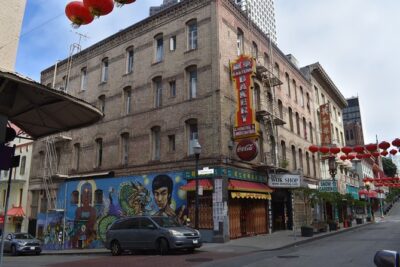
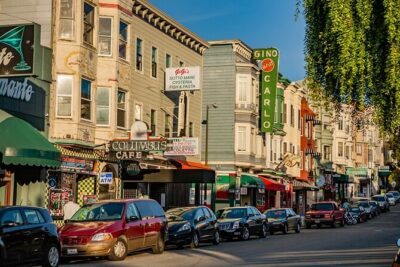
As you keep walking through South of Market, the tour also points out Folsom Street, known for its gay history. It is one of those locations where history is not only about industries or buildings. It is also about community life and cultural identity.
The value here is balance. SoMa is easy to reduce to startups and skyline photos. This tour refuses that shortcut. It helps you see that the neighborhood’s story includes social spaces and cultural transformation, not just financial growth.
Because this is still a guided walk, you get those context pieces while your feet keep moving. You do not have to stop and research later to understand why the street matters.
Salesforce Terminal Rooftop Garden: Tar Flat, Natural Gas Roots, and the Skyline
The finish is near Market Street at the rooftop garden of Salesforce Terminal. This is your payoff stop. From above, you get skyline and Bay views, plus a clearer sense of how much has changed in South of Market.
The guide ties the Salesforce project to the idea that tech is a visible imprint on the city. It is also positioned as the largest development in recent history. That framing matters because you can feel the scale when you arrive, even if you did not plan to study a single building.
You also get specifics about what came before. The site was built over a beachfront natural gas refinery. Before that, it was home to the city’s poorest neighborhood, Tar Flat. That is a sobering contrast to the clean lines and planted rooftop garden you see at the end. It helps you understand why this area now looks polished, while still carrying earlier uses and economic divides under the surface.
And then there is the detail that makes the stop memorable: Klockar’s blacksmith. It is reminiscent of the neighborhood’s early history as a metalworking center. Even when the city keeps upgrading, traces of past labor show up in small, intentional ways.
Getting Around After: Where to Go When the Tour Ends
When you finish near Salesforce Tower, you get an easy setup for the rest of your day. The route ends at a spot with straightforward access to both BART and MUNI lines. The Powell Street cable car is also about a 15-minute walk away.
This matters because a 70-minute tour can fit into almost any itinerary. I like tours that do not trap you in one corner of the city. This one releases you near major transit, so you can either head to downtown sights or keep exploring SoMa on your own.
Who Should Book This South of Market Walk
This is a great fit if you:
- Want a short, focused way to understand SoMa through tech and city planning
- Care about how neighborhoods change across eras, including the harder parts like eviction and urban renewal
- Like walking tours where the guide adds context and points out details you would miss on your own
- Prefer mostly flat routes and want a wheelchair-accessible option
It is less ideal if you want a long all-day itinerary, hands-on exhibits, or lots of indoor time. Since the pacing is built for learning while moving, you need comfortable shoes and the willingness to walk and listen.
Price and Value: Why $30 Works for a 70-Minute Tour
At $30 per person for a 70-minute guided walking tour, the value comes from how much ground the guide can cover with interpretation. You are not paying for one landmark. You are paying for a sequence: South Park to 2nd Street, to Yerba Buena Gardens, and finally to a major rooftop garden finish.
Also, there are no obligatory additional fees. That keeps the budget simple, especially if you are combining this with other San Francisco activities.
In my view, this price makes sense for two types of people: visitors who want an orientation they can’t easily assemble themselves, and locals who want the neighborhood explained with specifics. With Wes running the show, the tour leans into practical storytelling tied to real places, not generic tech talk.
Should You Book the South of Market Technology and History Tour?
Yes, if you want a compact walk that connects modern tech to the city’s layered past. The ending at Salesforce Park rooftop garden, paired with the urban renewal discussion at Yerba Buena Gardens, gives you both the skyline charm and the sharper questions that make SoMa feel like a living lesson.
Before you book, just check that the 70-minute pace fits your day. Wear comfortable shoes and comfortable clothes, because you will be on your feet for a solid hour plus.
If you like local guides who can connect startup culture to older industries, then this one is an easy recommendation.
FAQ
How long is the San Francisco Technology and History Tour of South of Market?
The tour lasts about 70 minutes.
What does the tour cost?
It costs $30 per person.
Where does the tour start and where does it end?
It starts in South Park, with the meeting point listed around 162 S Park St depending on the option booked. It ends at the rooftop garden of Salesforce Terminal near Salesforce Tower.
Is the tour wheelchair accessible?
Yes. The tour is wheelchair accessible, and it runs through South of Market, which is described as the flattest neighborhood in San Francisco.
What major stops will we visit?
You will visit South Park, walk along 2nd Street, see Yerba Buena Gardens, and finish at Salesforce Park rooftop garden at Salesforce Terminal. The tour also references Folsom Street and the industrial history themes tied to the area.
Can I cancel for a full refund?
Yes. Free cancellation is available up to 24 hours in advance for a full refund.
More Tours in San Francisco
- Big Bus SF: Hop-on Hop-off Tour with 17 Stops and Sunset Option★ 4.0 · 4,539 reviews
- Napa and Sonoma Wine Country Full-Day Tour from San Francisco★ 4.5 · 4,455 reviews
- San Francisco: Hop-On Hop-Off Sightseeing Tour with 17 Stops★ 4.5 · 3,600 reviews
- Yosemite Highlights & Giant Sequoias Day Tour from San Francisco★ 4.5 · 3,455 reviews
- San Francisco Love Tour★ 5.0 · 2,830 reviews
- San Francisco: Alcatraz Island & 48-Hour Hop-On Hop-Off Tour★ 4.6 · 2,245 reviews
More Tour Reviews in San Francisco
- Muir Woods and Sausalito (Return by Bus or Ferry)★ 4.5 · 5,098 reviews
- Big Bus SF: Hop-on Hop-off Tour with 17 Stops and Sunset Option★ 4.0 · 4,539 reviews
- Napa and Sonoma Wine Country Full-Day Tour from San Francisco★ 4.5 · 4,455 reviews
- Small Group Yosemite and Giant Sequoias Day Trip from San Francisco★ 5.0 · 3,671 reviews
- San Francisco: Golden Gate Bay Cruise★ 4.7 · 3,644 reviews
- San Francisco: Hop-On Hop-Off Sightseeing Tour with 17 Stops★ 4.5 · 3,600 reviews
From Garages to Silicon Valley
- San Francisco: Silicon Valley Private Tour with Hotel Pickup★ 4.9 · 168 reviews
- From San Francisco: Silicon Valley Private Tour★ 4.9 · 83 reviews
- From San Francisco: Silicon Valley Tech Small-Group Tour★ 3.4 · 33 reviews
- Silicon Valley Private Tour★ 5.0 · 24 reviews
- Silicon Valley Tour Private Day Trip from San Francisco★ 4.5 · 18 reviews
- San Francisco: Silicon Valley Private Tour with Transfers★ 4.4 · 18 reviews
Fresh arrivals for a San Francisco itinerary
- San Francisco: Tour De San Francisco (Electric Bike Tour)
★ 4.7 · 3 reviews - Private Exploration of the Birds of San Francisco
★ 5.0 · 4 reviews - Zion, Bryce, Antelope, Grand Canyon, Las Vegas 6-Day Tour from SF
★ 5.0 · 3 reviews - Private Tour of Yosemite a Two Day Exploration
★ 5.0 · 4 reviews - The Presidio: Main Post to the Golden Gate Bridge
★ 5.0 · 3 reviews - Alcatraz Island Tour with San Francisco Bay Tour
★ 3.5 · 4 reviews
More ways into Silicon Valley & Tech Landmarks
 ★ 4.9Silicon Valley Private Tour with Hotel PickupFrom $500168 reviews
 ★ 4.9From San Francisco: Silicon Valley Private TourFrom $54283 reviews
 ★ 3.4From San Francisco: Silicon Valley Tech Small-Group TourFrom $18533 reviews
 ★ 5.0Silicon Valley Private TourFrom $50124 reviews
 ★ 4.4Silicon Valley Private Tour with TransfersFrom $51018 reviews
 ★ 4.5Silicon Valley Tour Private Day Trip from San FranciscoFrom $61218 reviews
 ★ 4.5Silicon Valley Private Tour from San FranciscoFrom $54515 reviews
 ★ 3.5Silicon Valley Tech FD Small Group TourFrom $1857 reviews
Try another angle on the same itinerary