
REVIEW · SAN FRANCISCO TASTINGS & FOOD WALKS
San Francisco: Mission District Food & History Walking Tour
Mission District has a way of grabbing you fast. This 3.5-hour walk pairs Mission Dolores landmarks with real food stops, then lands you at Balmy Alley for murals with a point behind the paint. I really like how the route stitches history, architecture, and daily life into one story, and I also like the fact that you eat along the way, not just snack at the end. The main drawback to plan for is time on foot, so if you get antsy with long walks or prefer a lighter food focus, it might feel like a lot.
The best part is the way a good local guide turns neighborhoods into something you can understand quickly. In the reviews, guides like Joseph are praised for personal stories and for making the Mission feel like a place you connect to, not a place you just observe. You end up learning why specific corners matter, while still getting enough freedom to look around.
You start at Mission San Francisco de Asís, then move through parks, streets, and murals at a pace that makes history feel practical. Expect comfortable shoes to be non-negotiable, and bring a weather layer because San Francisco weather has opinions.
Key highlights you will feel on this tour
Start at Mission San Francisco de Asís and see why it matters before you even hit the streets
Mission Dolores Park includes the Golden Fire Hydrant story tied to the 1906 earthquake
Café de Olla is the food anchor, with Oaxacan-style items made from scratch
Mission Street and 24th Street mix architecture and casual eating in a walkable stretch
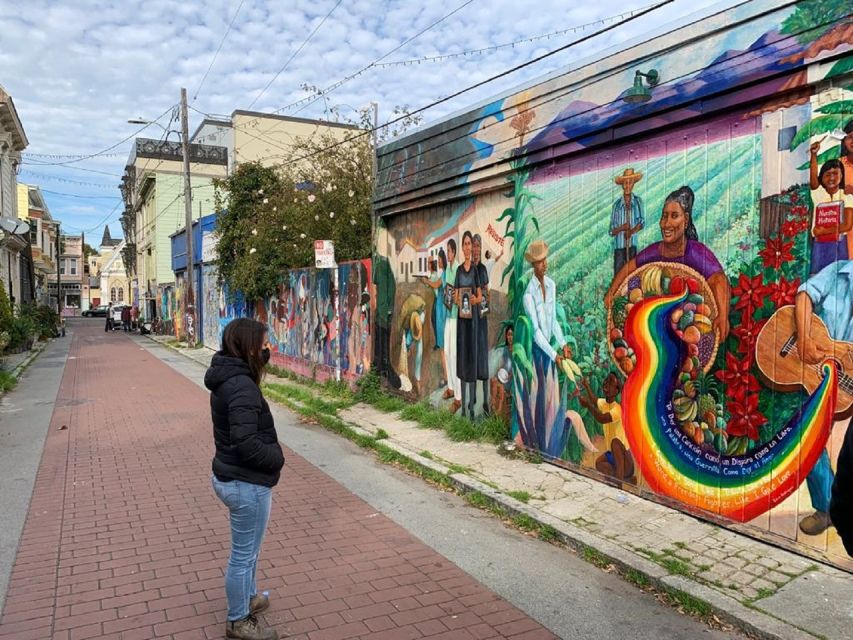
Balmy Alley murals come with context, including human rights and Central America themes
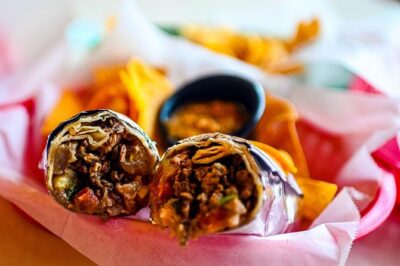
Murals, taquerias and another walk through the Mission


Mission San Francisco de Asís, the story begins where the streets do
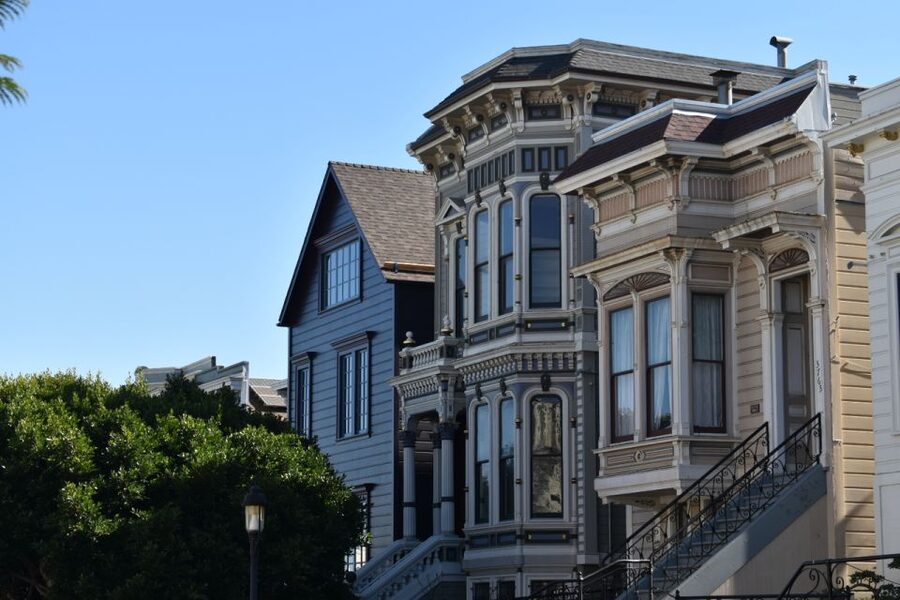
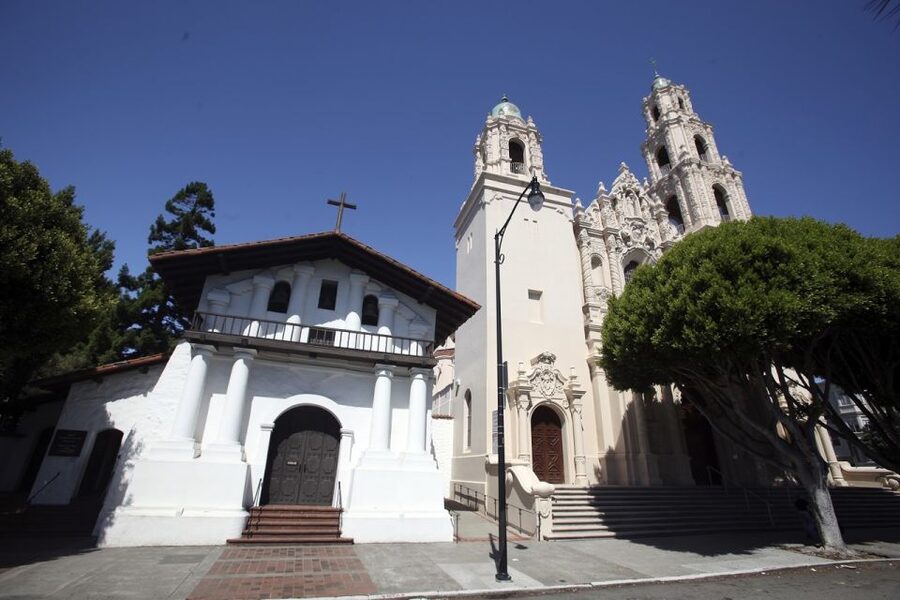
Most food and history tours start with a generic intro. This one starts with Mission San Francisco de Asís, also called Mission Dolores. It is a strong first move because the Mission District is not random. The neighborhood grows out of this site, so meeting here helps everything make sense later.
You get access to a place with serious religious art, chapel gardens, and a cemetery component that stands out because it is within the city limits. That detail matters. It is the kind of fact that is easy to miss if you are just passing by, but once you know it, you look at the mission grounds differently.
If you like history that has physical anchors, you will appreciate the order of operations. First, you see the origin point. Then you take what you learned and watch it echo through the park, the neighborhood streets, and even the way people decorate and talk through art.
Practical note: you will be on your feet right away, so wear shoes that handle uneven sidewalks and stairs without drama.
Mission Dolores Park and the Golden Fire Hydrant, how 1906 becomes real
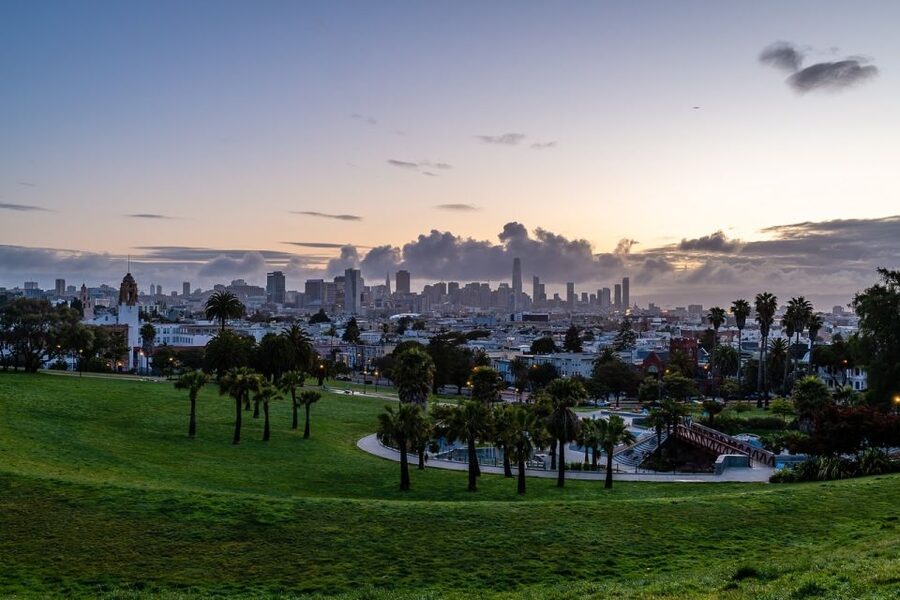
After the mission, the walk shifts to Mission Dolores Park, where you get both scenery and a time machine. The park has a past that is not obvious at first glance. It was formerly a Jewish cemetery, and today it is one of the most popular places in the city. That layers feeling you get here, where recreation sits over memory, is a big part of why people love this stop.
You also pass by Father Hidalgo’s statue. Even if you do not memorize every historical detail, it helps you orient the neighborhood around people and events, not just buildings. And then comes the star: the Golden Fire Hydrant. This is the only fire hydrant to survive the 1906 earthquake, and the guide ties it directly to what the district went through and what it needed afterward.
That hydrant moment is more than a photo op. It gives you a simple, human-sized symbol for something huge. In a neighborhood shaped by waves of change, a small object that survived becomes a marker for resilience.
One tip for making this stop work for you: pause long enough to look across the park while you listen. When you can see the view, the stories land better.
Café de Olla, where the Mission gets specific
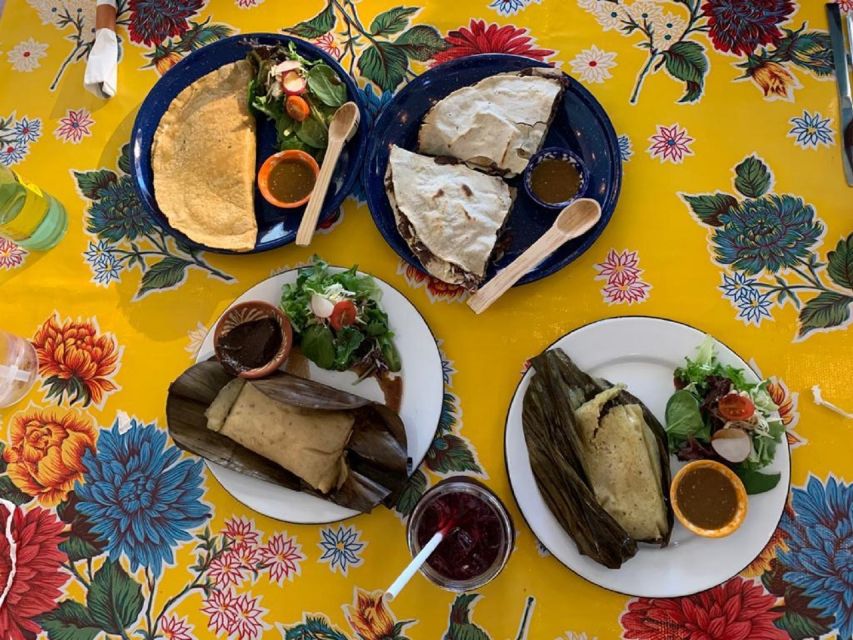
Your first tastings stop is Café de Olla, right in the Mission. This is where the tour stops being mostly educational and turns into real sensory learning.
The big selling point is that the food is made from scratch, with an Oaxacan-style influence. That matters because you are not just sampling anything that happens to be on a menu. You are tasting choices that connect to regional flavors.
From what is listed for the experience, you will likely run into foods such as quesadillas, tamales, tlayudas, and tortillas. There is also coffee and drink options like agua fresca and ice caffe de olla.
What I like about using a café as the anchor is that it gives you a break without breaking the flow. You refuel, then your guide can point out what you are seeing on the streets with fresh energy.
The only drawback I can see here is personal preference. If you do not like heavier corn-based foods or you prefer a very mild spice level, you might want to pace yourself and ask the guide about what is spicier versus more gentle. The tour structure does not change, but you can make the tasting more comfortable for your palate.
Mission Street and 24th Street, architecture you can actually point to
Once you leave Café de Olla, you move along Mission Street, a lively corridor with traditional stores and theatres. This part is helpful because it turns the Mission into a living neighborhood rather than a museum.
As you walk, you get to spot mixed architectural styles that shape the streets: Victorian homes, stick-style houses, and Mission Revival buildings that mix old-school form with modern use. The practical value here is that architecture stops being a trivia game. You start recognizing patterns and understanding how communities rebuild and adapt over time.
Then you head toward 24th Street, a walkable eight-block stretch with lots of food options. This section is designed for variety. You go from tacos to pastries, and you can feel how different food styles sit next to each other in a single neighborhood.
You also get a second food tasting after this portion, with a choice that includes tacos, pastry, or coffee. This is smart planning for a group tour because it lets you match the tasting to your cravings. If you already feel full from the Café de Olla stop, going for something lighter or a coffee option can make the rest of the walk more pleasant.
One pacing note: because this is a walking tour that includes multiple tasting moments, it helps to eat slowly. That way you enjoy each flavor and you stay comfortable for Balmy Alley at the end.
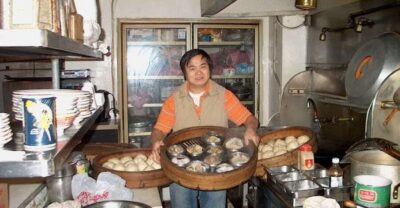
Dumplings, sourdough and another edible neighborhood
Balmy Alley murals, anger and art with a human rights spine
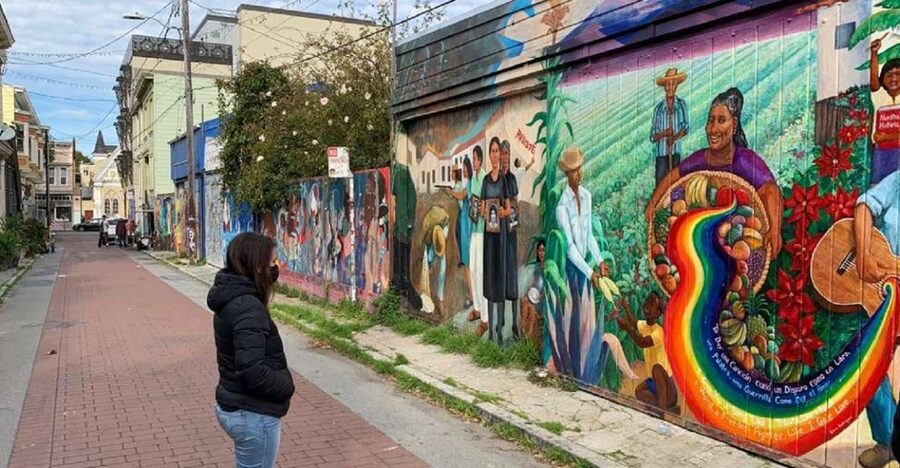
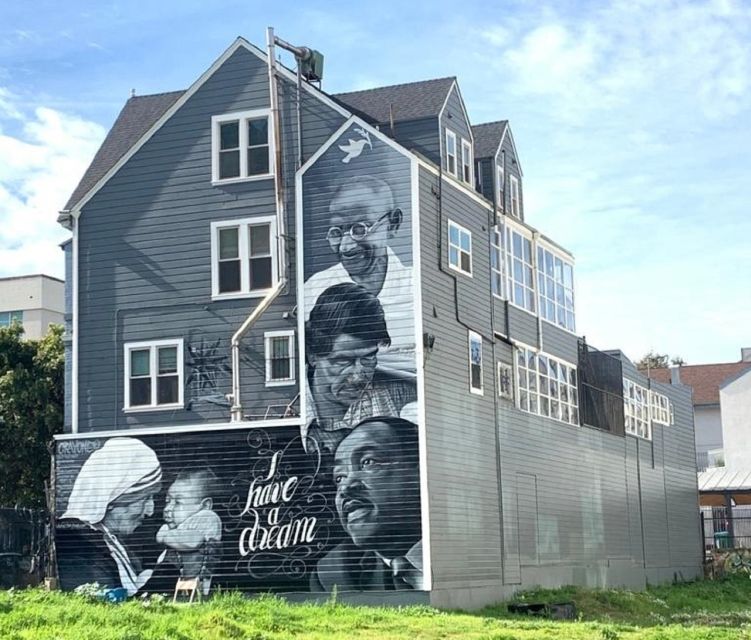
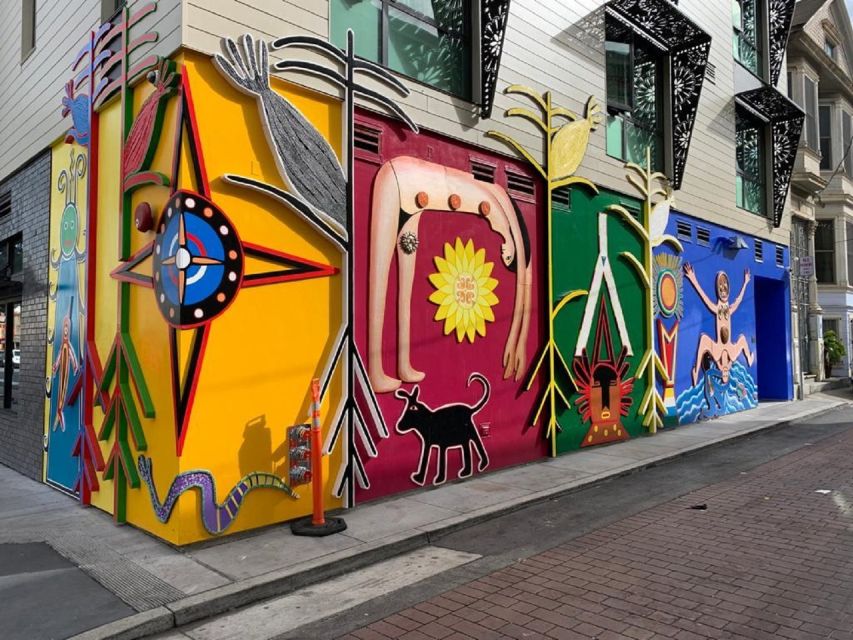
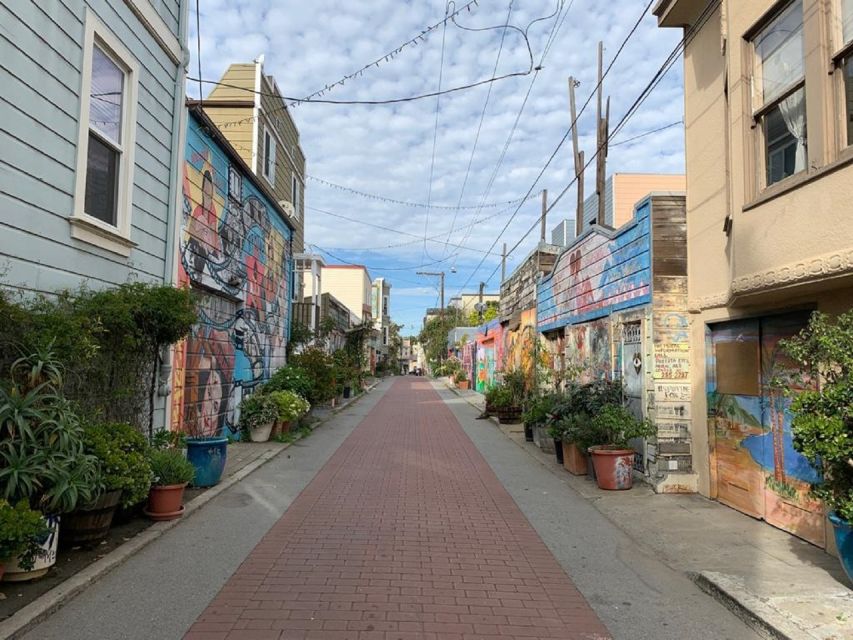
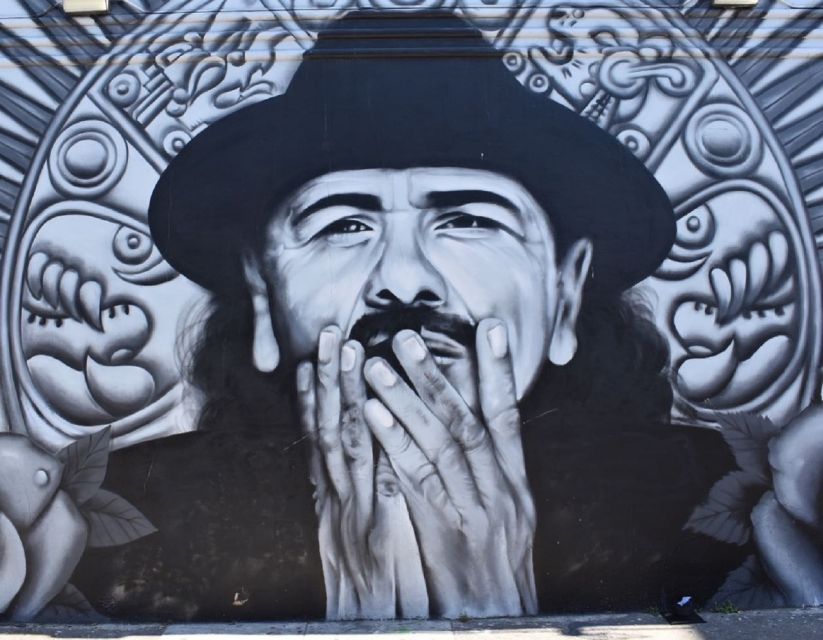
The final big cultural stop is Balmy Alley, known for its extensive collection of murals. If you only look at murals as decoration, you will miss the point. The tour explains the themes behind these artworks, and the themes are not neutral.
Most of the murals were painted as an expression of outrage over human rights violations and political abuses in Central America. That context changes how you experience the alley. You are not just admiring technique. You are reading visual arguments, grief, and political urgency.
This is where the tour earns its balance. Earlier you learn about the Mission’s physical and civic history, and then you end with art that reflects modern struggles tied to real people and real policies. It connects past and present.
Photo tip without the cliché: take a few pictures, but also look longer than you think you need. The murals have layers, and you will understand them better once you hear what the guide is pointing out.
Price and pacing, is $99 worth it for this 210-minute walk?
At $99 per person for about 210 minutes, you are paying for more than the walking. You are paying for three things that add up quickly: a professional local guide, an entrance fee to Mission San Francisco de Asís, and two food tasting moments.
Here is how I think about value on tours like this:
- Food is part of the cost structure, not a bonus. You get tastings at Café de Olla and a second choice tasting later, with items like tamales, tortillas, and options such as tacos or pastry, plus drinks like agua fresca or caffe de olla.
- Historical access is part of the pricing, because the mission stop includes an entrance fee. You are not just looking from outside.
- The guide is the glue. The reviews highlight Joseph specifically for deep local storytelling. When a guide is from the community and uses personal stories alongside facts, the experience feels less like a script and more like a conversation.
Pacing is the only real variable. The route packs in a lot of meaningful stops, including park time, two tastings, and multiple street walks. One review note flagged that some time felt like too much in the Mission area. That is not a flaw in the content, but it is a reminder to choose this tour with the right expectations. If you want a more scattershot approach across many parts of the city, this one is more focused.
Who should book this Mission District tour
This is a great fit if you want:
- a neighborhood walk that connects landmarks, food, and street art into one coherent story
- a guided experience that helps you see details you would likely miss on your own
- tastings that lean traditional and regional, not generic tourist food
It may be less ideal if you:
- dislike long walking segments in one area
- want a very light snack plan instead of real tastings at two stops
- prefer history that stays strictly inside one period, rather than spanning eras through the neighborhood
Should you book it?
If your ideal San Francisco day mixes food, architecture, and murals with real-world context, I would book this. The biggest strength is the combination of Mission Dolores sites, the Golden Fire Hydrant story, and the mural context at Balmy Alley, all held together by a guide who can make the area feel personal.
Just go in knowing it is a focused Mission District experience, not a city-wide sampler. Wear comfortable shoes, bring a weather layer, and treat the tastings as part of the show, not an afterthought. That mindset is what makes this tour feel like a memorable day instead of just a checklist.
FAQ
Where do I meet the guide for the Mission District tour?
You meet your guide in front of Misión San Francisco de Asís.
How long is the tour?
The duration is 210 minutes.
What language is the tour guide?
The tour is in English.
What food tastings are included?
You get a food tasting at Café de Olla, plus a second food tasting where you can choose tacos, pastry, or coffee.
Is there an entrance fee included?
Yes, the entrance fee to Mission San Francisco de Asis is included.
What should I bring for the walk?
Bring comfortable shoes and comfortable clothes, plus weather-appropriate clothing.
What are the cancellation rules and payment options?
You can cancel up to 24 hours in advance for a full refund. There is also a reserve now, pay later option.
More Tour Reviews in San Francisco
- Muir Woods and Sausalito (Return by Bus or Ferry)★ 4.5 · 5,098 reviews
- Big Bus SF: Hop-on Hop-off Tour with 17 Stops and Sunset Option★ 4.0 · 4,539 reviews
- Napa and Sonoma Wine Country Full-Day Tour from San Francisco★ 4.5 · 4,455 reviews
- Small Group Yosemite and Giant Sequoias Day Trip from San Francisco★ 5.0 · 3,671 reviews
- San Francisco: Golden Gate Bay Cruise★ 4.7 · 3,644 reviews
- San Francisco: Hop-On Hop-Off Sightseeing Tour with 17 Stops★ 4.5 · 3,600 reviews
Eat Across San Francisco
- San Francisco Authentic Food Tour with 5 Locals Favorites Dishes★ 5.0 · 852 reviews
- San Francisco: Chinatown Culinary Walking Tour★ 4.8 · 265 reviews
- San Francisco: North Beach and Little Italy Food Tour★ 4.8 · 188 reviews
- Mission District Food Tour: Appetizers, Entrée and Dessert★ 5.0 · 182 reviews
- Exclusive North Beach Food Tour in San Francisco★ 5.0 · 162 reviews
- SF’s Chinatown: Tea & Dim Sum Food Tour – Includes full meal, 3hr★ 5.0 · 153 reviews
Murals and Taquerias in the Mission
- Mission District Food Tour: Appetizers, Entrée and Dessert★ 5.0 · 182 reviews
- San Francisco: Mission District Food Tour with 6 Tastings★ 4.9 · 104 reviews
- Mission District Food Tour★ 5.0 · 69 reviews
- Mission District Food and Culture Walking Tour★ 4.5 · 47 reviews
- San Francisco: Mission District Walking Food Tour★ 4.8 · 22 reviews
- Mission 18th Street San Francisco Food Tour★ 4.5 · 15 reviews
Fresh arrivals for a San Francisco itinerary
- San Francisco: Tour De San Francisco (Electric Bike Tour)
★ 4.7 · 3 reviews - Private Exploration of the Birds of San Francisco
★ 5.0 · 4 reviews - Zion, Bryce, Antelope, Grand Canyon, Las Vegas 6-Day Tour from SF
★ 5.0 · 3 reviews - Private Tour of Yosemite a Two Day Exploration
★ 5.0 · 4 reviews - The Presidio: Main Post to the Golden Gate Bridge
★ 5.0 · 3 reviews - Alcatraz Island Tour with San Francisco Bay Tour
★ 3.5 · 4 reviews
More ways into San Francisco Tastings & Food Walks
 ★ 5.0San Francisco Authentic Food Tour with 5 Locals Favorites DishesFrom $87852 reviews
 ★ 4.8Chinatown Culinary Walking TourFrom $84265 reviews
 ★ 4.8North Beach and Little Italy Food TourFrom $84188 reviews
 ★ 5.0Mission District Food Tour: Appetizers, Entrée and DessertFrom $115182 reviews
 ★ 5.0Exclusive North Beach Food Tour in San FranciscoFrom $115162 reviews
 ★ 5.0SF’s Chinatown: Tea & Dim Sum Food Tour – Includes full meal, 3hrFrom $99153 reviews
 ★ 4.5San Francisco Combo: Ferry Building Food Tour and AlcatrazFrom $181152 reviews
 ★ 4.8Food Walking Tour of Chinatown & North BeachFrom $94148 reviews
Try another angle on the same itinerary