
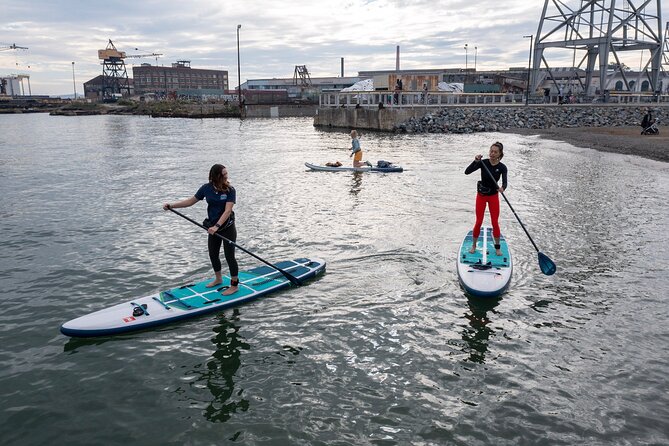
REVIEW · KAYAKING, SURFING & BAY WATER SPORTS
Learn to Paddle Board on the San Francisco Bay!
San Francisco Bay is a great teacher. This beginner stand-up paddleboard lesson takes you along the shoreline near Crane Cove and the Dogpatch area while you learn how to move with confidence on calmer water. It’s guided, small-group, and focused on real skills you can use next time.
I love two parts most. First, you get basic technique instruction designed for brand-new paddlers, so you spend your time learning the right habits, not just wobbling. Second, you learn how to interpret currents, tides, and wind, plus how to think about route planning before you go.
One consideration: this experience depends on good weather. If conditions are poor, you may need to switch dates, since the water experience is meant to be safe and manageable.
Key things to know before you go
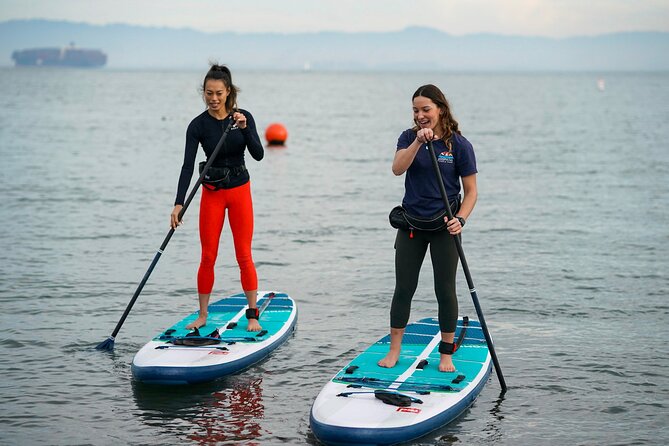
- Small group, max 5 people: you get more attention than in big classes.
- Calmer water near Crane Cove: this area is described as among the calmest spots in the region for beginners.
- Technique plus practical Bay reading: you don’t just paddle, you learn what the water is doing.
- Route planning skills: you practice the thinking behind safer, smarter paddles.
- Instructors who build confidence: Jillian helps newer paddlers feel safe and comfortable, and Bruno is known for patience while teaching.
Paddle, surf or skim across Bay Area water
Entering the Bay at Chase Center, your calm-water launch
You start in San Francisco with a morning plan that feels straightforward. You meet at 701 Illinois St, San Francisco, CA 94107, and the session runs about 1 hour 30 minutes, starting at 9:00 am. The activity ends back at the meeting point.
Stop 1 is Chase Center, which works well as an easy anchor point before you head out to the water. I like this setup because you can orient yourself early, get the basics of what you’re doing, and then shift attention to the shoreline and open water conditions without rushing.
Next comes the actual paddling area at the San Francisco Bay, where you’ll explore the shoreline near Crane Cove and the Dogpatch. This is the part that matters for first-timers: your lesson is built around waters described as the calmest in the region, which makes it far easier to learn the fundamentals without the constant fight.
A small timing reality check
Because the session is about 90 minutes, you won’t turn into a power paddler by the end. You will, however, leave with a clear baseline: how to stand, how to paddle with control, and how to read what the bay is doing.
Beginner technique coaching you can actually use
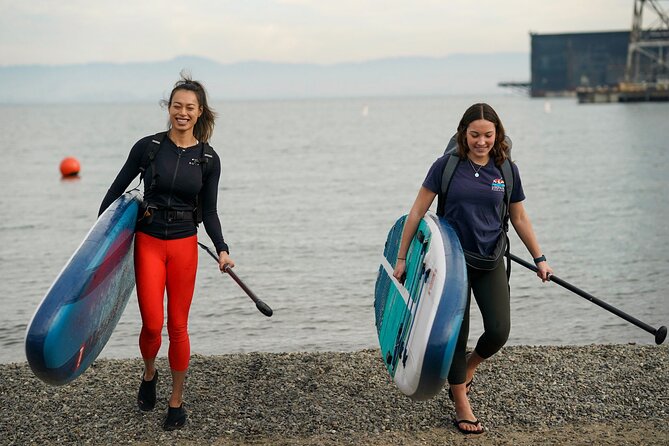
This lesson is aimed at people who are new to stand-up paddleboarding. The focus is on proper technique for getting started, so you learn the basics early instead of picking up whatever habits happen to keep you upright.
What “proper technique” should mean for you in plain terms is this: it’s about getting your movement efficient and repeatable. You spend time practicing the actions you need to paddle and steer in a way that works with the water, not against it.
The teaching style matters too. In the examples shared about past lessons, Jillian is described as making newer paddlers feel safe and comfortable right away, even when someone isn’t athletic. Bruno is praised for being patient and kind, which is exactly what you want in a first lesson.
Why a small group matters more than you think
The class size is capped at 5 travelers. That number is small enough that your guide can watch what you’re doing and correct quickly. For beginners, tiny adjustments can feel huge, and this setup helps you get that feedback before you lock in awkward habits.
Also, a small group tends to move at a learning pace, not a production pace. You’ll have time to ask questions and connect what you’re doing on the board to what your guide is explaining.
Currents, tides, and wind: the Bay lesson that changes your next paddle
A good paddleboard lesson teaches you how to move. A great one teaches you when to move, where to go, and what to expect from the water. This experience includes instruction on interpreting currents, tides, and winds, plus how that connects to route planning.
Here’s the practical value for you. In real bay conditions, water motion can shift your direction and speed even when your arms feel like they’re doing the same thing. Tides can change how fast the bay is moving through different areas. Wind can push you off-line or make paddling harder than it looks from shore.
The lesson doesn’t require you to be a scientist. It’s guided learning, and it’s meant for newcomers. Your goal is to finish with a working mental checklist: notice what the water is doing, notice what the air is doing, and make a plan that accounts for both.
Route planning is more than a map
You’ll also cover route planning, which is the part many first-timers skip. Planning here means thinking through the path you’ll take and how you’ll manage the bay’s push and pull. Even if you only paddle close to shore in the future, planning skills help you feel calmer and more in control.
Exploring the shoreline near Crane Cove and Dogpatch
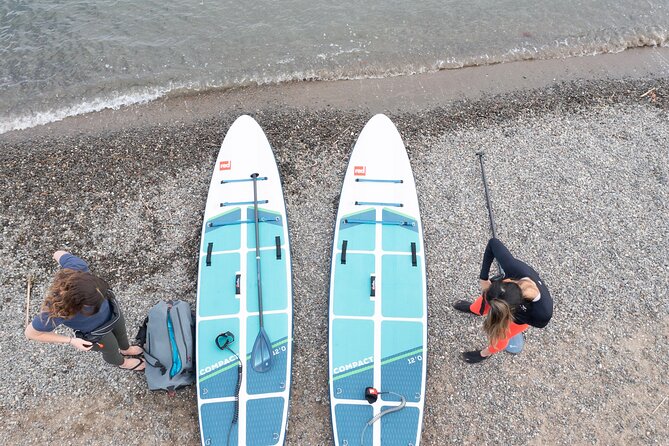
After you get your bearings, you’ll explore the shoreline near Crane Cove and the Dogpatch. I like this portion because it turns your class into an actual bay experience, not just a practice loop.
Crane Cove is part of why this lesson works for beginners. The water at this beach area is described as among the calmest in the region, which can make a big difference when you’re learning balance and basic paddle technique at the same time.
Meanwhile, the Dogpatch shoreline gives you a sense of place. You’re on San Francisco Bay, not a backyard pond, so you get the feeling of motion and openness that makes paddleboarding fun, without throwing brand-new paddlers into extreme conditions.
What to pay attention to on your paddle
Even without getting technical, you can apply what you learn on the spot:
- Watch how your direction changes when you adjust your paddling.
- Notice when the water feels smoother or more active.
- Pay attention to what your guide points out about winds and movement, since it ties directly to route planning.
That’s how the “classroom” part becomes a skill, not a lecture.
How Stop 1 and Stop 2 fit together
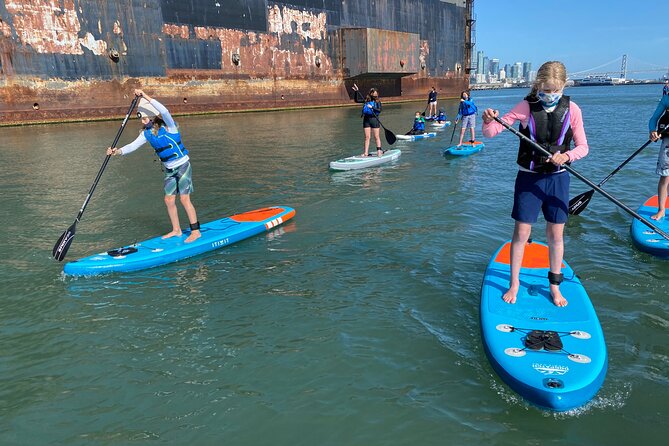
It helps to think of the day as two phases.
Stop 1 at Chase Center is about setup and orientation. It’s where you begin the lesson and start learning the fundamentals you’ll use right away. This phase is your ramp-up, and it’s also when you’re most likely to ask questions because you’re still in learning mode.
Stop 2, out on the San Francisco Bay, is where the learning gets applied. This is where you interpret conditions and put the technique and planning together while you paddle along the Crane Cove and Dogpatch shoreline. If you’re a first-timer, this second phase is the one that sticks with you, because it’s the one where your confidence grows fast.
A drawback to consider: short lesson, focused scope
The whole thing is around 1 hour 30 minutes, so it’s not a long cruising tour. If your dream is a long paddle with plenty of sightseeing time, you might want to pair this lesson with another outing later. Still, for learning the foundation, this length is a sweet spot.
Price and value for a 90-minute guided lesson
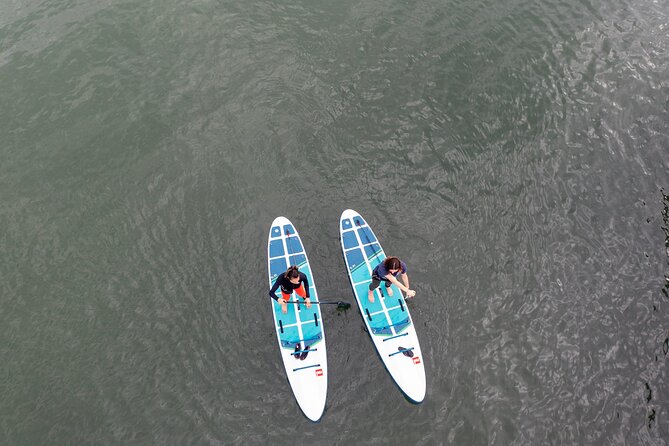
The price is $131.44 per person for an experience that’s described as a guided stand-up paddleboard lesson for beginners, with time devoted to technique and to interpreting bay conditions. For San Francisco, that cost can feel high at first glance, but the structure is what justifies it.
You’re paying for coaching that includes:
- instruction for brand-new paddlers
- learning how to interpret currents, tides, and winds
- route planning fundamentals
- small-group attention (max 5)
Also, this class is popular. On average, it’s booked about 35 days in advance. That’s a sign you should plan ahead rather than assume you’ll find space last minute.
Who gets the best value
You get the most value if you’re:
- new to paddleboarding and want correct technique right away
- the type who feels safer with guidance and clear explanations
- curious about what makes the bay tricky or manageable
If you already know how to paddle and navigate, you might find it helpful as a refresher or a way to learn bay-specific thinking. But the core value here is beginner learning plus practical planning.
Meeting point and timing, the parts that affect your day
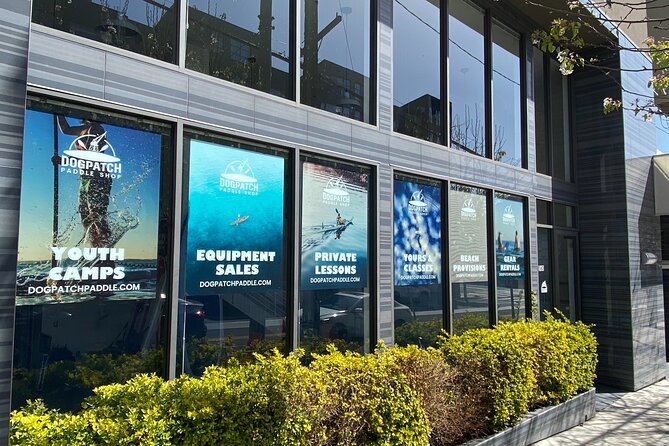
This starts in the city, at 701 Illinois St. It’s also described as near public transportation, which is useful if you don’t want to fight for parking. Start time is 9:00 am, and the session returns you to the same meeting point.
Because you’re dealing with water conditions, you should treat the schedule as a real part of the experience. The time you’re on the bay is limited, so showing up on time matters more than usual. If you miss the start, you won’t get a full lesson because there isn’t extra time built in.
Language is English, and a mobile ticket is used. That’s convenient for day-of simplicity and keeps the flow quick.
Most people can participate
The experience is described as suitable for most travelers, and that lines up with the beginner focus. One past participant described feeling safe and comfortable with instructor Jillian even at a later age and without being athletic. That’s a reassuring reminder that confidence matters, and good teaching helps.
Who this San Francisco paddle lesson suits best
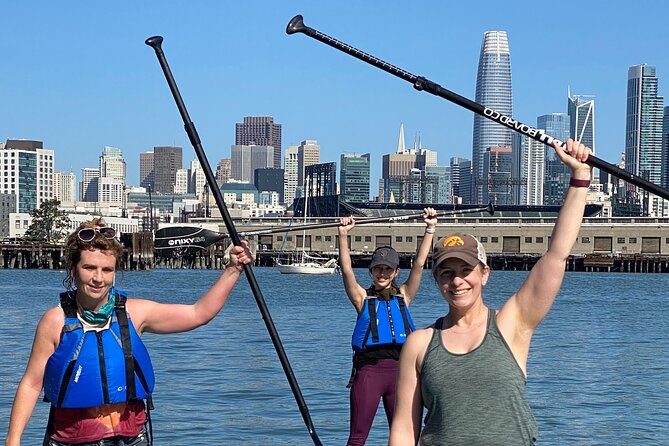
This is a great pick if you want your first paddleboarding experience to be guided, not chaotic. The lesson is designed for beginners, it’s in calmer bay water, and it’s built around learning how to read conditions.
You’ll likely enjoy it most if you:
- want a friendly, coached start with a small group
- care about learning the why behind technique, currents, and planning
- want to explore near Crane Cove and the Dogpatch shoreline
It’s also a solid choice if you’d rather learn from a teacher than from trial and error. In the examples shared, Bruno is praised for patience, and Jillian for making the experience feel safe and comfortable while still keeping it fun with stories.
Should you book this Crane Cove paddleboard lesson?
Book it if you’re a beginner who wants more than a quick try. This is a lesson that aims to give you usable technique and real confidence by teaching how to interpret the bay through currents, tides, winds, and route planning.
Skip it or reconsider if weather variability would stress you out. The experience is dependent on good weather, and if conditions are poor you’ll need to switch dates or get a full refund.
If you can line up a good morning and you want a small-group guided start in calm waters near Crane Cove and the Dogpatch, this is a smart use of time and money. You’ll leave with skills you can build on, not just a memory of wobbling on a board.
FAQ
How long is the paddleboarding lesson?
It lasts about 1 hour 30 minutes.
Where is the meeting point?
You meet at 701 Illinois St, San Francisco, CA 94107, USA.
What time does the activity start?
The start time is 9:00 am.
What group size should I expect?
There is a maximum of 5 travelers.
Is this lesson for beginners?
Yes. It includes a stand-up paddleboard lesson for beginners with basic technique instruction for getting started.
What language is the tour offered in?
The lesson is offered in English.
What if the weather is poor?
This experience requires good weather. If it’s canceled due to poor weather, you’ll be offered a different date or a full refund.
More Canoes & Kayaks in San Francisco
- San Francisco Bay Kayak Or Paddle Board Tour★ 4.5 · 4 reviews
More Tour Reviews in San Francisco
- Muir Woods and Sausalito (Return by Bus or Ferry)★ 4.5 · 5,098 reviews
- Big Bus SF: Hop-on Hop-off Tour with 17 Stops and Sunset Option★ 4.0 · 4,539 reviews
- Napa and Sonoma Wine Country Full-Day Tour from San Francisco★ 4.5 · 4,455 reviews
- Small Group Yosemite and Giant Sequoias Day Trip from San Francisco★ 5.0 · 3,671 reviews
- San Francisco: Golden Gate Bay Cruise★ 4.7 · 3,644 reviews
- San Francisco: Hop-On Hop-Off Sightseeing Tour with 17 Stops★ 4.5 · 3,600 reviews
Paddles and Boards on Bay Water
- Beginner Surfing in San Francisco at Pacifica Beach★ 5.0 · 45 reviews
- Beginner Surf Lessons At Stinson Beach★ 5.0 · 5 reviews
- Learn to Catch and Cook Crab under Golden Gate Bridge SF★ 5.0 · 4 reviews
- San Francisco Bay Kayak Or Paddle Board Tour★ 4.5 · 4 reviews
Fresh arrivals for a San Francisco itinerary
- San Francisco: Tour De San Francisco (Electric Bike Tour)
★ 4.7 · 3 reviews - Private Exploration of the Birds of San Francisco
★ 5.0 · 4 reviews - Zion, Bryce, Antelope, Grand Canyon, Las Vegas 6-Day Tour from SF
★ 5.0 · 3 reviews - Private Tour of Yosemite a Two Day Exploration
★ 5.0 · 4 reviews - The Presidio: Main Post to the Golden Gate Bridge
★ 5.0 · 3 reviews - Alcatraz Island Tour with San Francisco Bay Tour
★ 3.5 · 4 reviews
More ways into Kayaking, Surfing & Bay Water Sports
 ★ 5.0Beginner Surfing in San Francisco at Pacifica BeachFrom $13945 reviews
 ★ 5.0Beginner Surf Lessons At Stinson BeachFrom $1005 reviews
 ★ 4.5San Francisco Bay Kayak Or Paddle Board TourFrom $1314 reviews
 ★ 5.0Learn to Catch and Cook Crab under Golden Gate Bridge SFFrom $1504 reviews
Try another angle on the same itinerary